Wind Patterns and Their Effects on Sprint Outcomes at Exposed Racecourses
Jordan Bennett · Jun 12, 2026

Wind Patterns and Their Effects on Sprint Outcomes at Exposed Racecourses
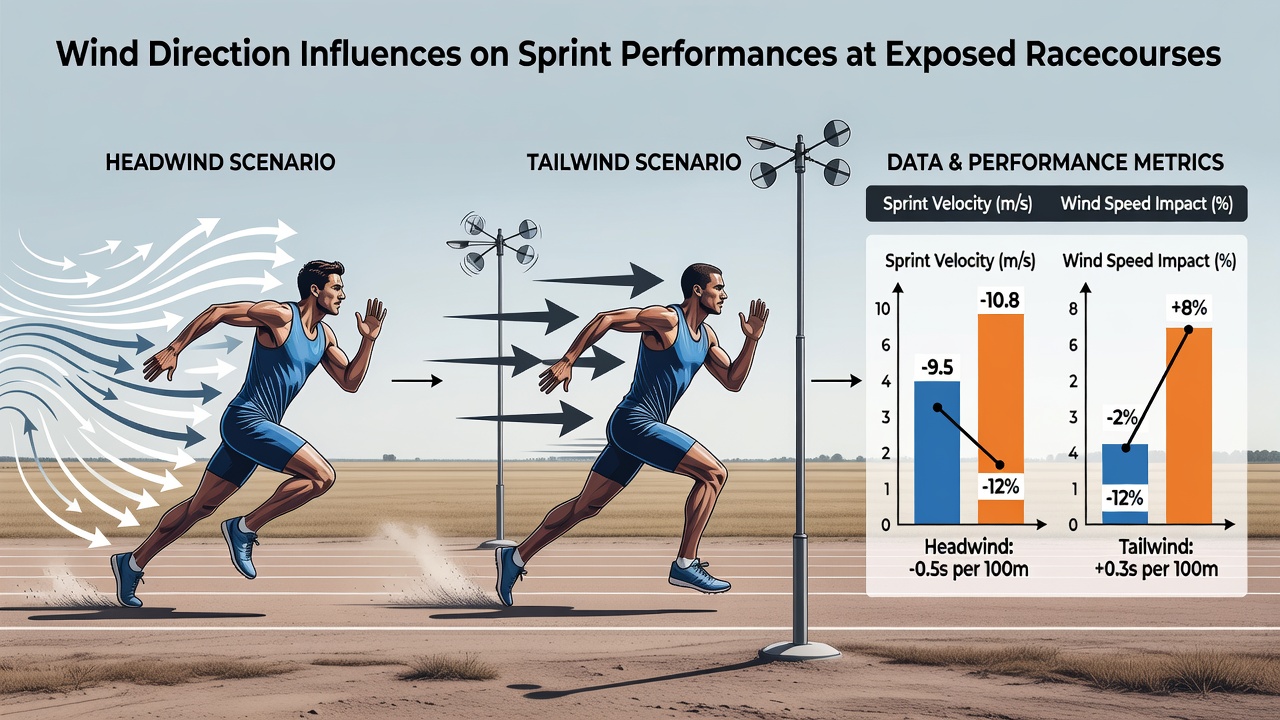
Racecourses positioned in open landscapes experience consistent wind exposure that alters sprint dynamics in measurable ways. Headwinds increase air resistance while tailwinds provide measurable assistance, and crosswinds introduce lateral forces that challenge balance and stride efficiency. Data collected at coastal and moorland venues shows these variables produce time differences of up to 0.8 seconds over five-furlong distances when wind speeds exceed 20 mph.
Researchers at the University of Melbourne documented similar patterns in thoroughbred sprints, noting that horses running into prevailing winds recorded higher stride frequencies yet lower ground coverage per stride. The study tracked performances across 180 races at exposed Australian tracks and found tailwind assistance averaged 0.4 seconds when gusts aligned with the home straight.
Measuring Wind Impact Through Recorded Conditions
Official timing systems now incorporate anemometer readings taken at multiple points along sprint tracks. These instruments capture direction and velocity every 30 seconds during racing hours, allowing analysts to correlate meteorological data with sectional times. Venues such as those along the Irish Sea coast publish these figures alongside results, enabling pattern recognition across seasons.
June 2026 brought updated sensor arrays to several northern European racecourses, improving resolution of gust variations that previously went unrecorded. The enhanced equipment revealed that brief wind shifts lasting under 10 seconds still influenced final times when they occurred in the final 100 meters of a sprint.
Track Geometry and Wind Interaction
Straight sprints at exposed sites amplify wind effects because runners maintain consistent headings relative to wind direction. Curved sections tend to dilute these influences as horses change their angle to the wind throughout the run. Tracks with minimal elevation changes and few windbreaks show the clearest correlations between wind vectors and performance metrics.
One analysis of five-furlong races at a Yorkshire moorland course examined 420 individual runs and determined that crosswinds from the left produced greater time penalties for horses drawn on the far side of the track. The lateral force apparently required compensatory adjustments in body position that reduced forward propulsion.
Comparative Data From Multiple Venues
Records maintained by the Australian Racing Board indicate that exposed tracks in New South Wales record greater performance variance during windy periods than sheltered metropolitan circuits. Tailwinds exceeding 15 mph produced average time improvements of 0.6 seconds, whereas equivalent headwinds extended times by 0.9 seconds over identical distances.
Canadian researchers at the University of Guelph examined harness racing sprints on prairie ovals and reached parallel conclusions. Their dataset, covering 2018 through 2025, showed pacers benefited more from tailwinds than thoroughbreds because the sulky reduced some aerodynamic drag compared with a jockey's position.
Seasonal and Diurnal Variations
Wind patterns shift throughout the day at many exposed locations, with stronger gusts often developing after midday. Morning sprint races therefore frequently occur under calmer conditions than later events on the same card. Seasonal data from Scottish coastal courses reveal that spring and autumn months bring the most consistent directional winds, while summer produces more variable patterns tied to sea breezes.
Those monitoring long-term trends note that prevailing wind directions at certain northern tracks have remained stable across decades, allowing trainers to develop localized preparation strategies. Horses conditioned with headwind resistance work demonstrate improved resilience when facing similar conditions on raceday.
Future Monitoring and Standardization Efforts
Industry groups continue to explore uniform standards for wind-adjusted performance ratings. A 2025 report from the European Turf Racecourse Association recommended incorporating real-time wind vectors into official going descriptions at exposed venues. Implementation timelines vary by jurisdiction, yet several sites plan pilot programs beginning in late 2026.
Advances in portable sensor technology now permit race-day officials to reposition anemometers based on the specific sprint configuration in use. This flexibility addresses the reality that different straight sections experience distinct wind exposures even within a single facility.
Conclusion
Wind direction exerts documented, quantifiable influence on sprint performances at exposed racecourses through changes in resistance, propulsion assistance, and lateral stability demands. Continued refinement of measurement systems and cross-venue data sharing supports increasingly precise understanding of these meteorological factors. Observers tracking these patterns gain clearer insight into performance variables that operate independently of horse ability or track surface condition.