Weather Irregularities Driving Changes in Goal Scoring Across Lower European Football Leagues
Jordan Bennett · Oct 27, 2026
Weather Irregularities Driving Changes in Goal Scoring Across Lower European Football Leagues
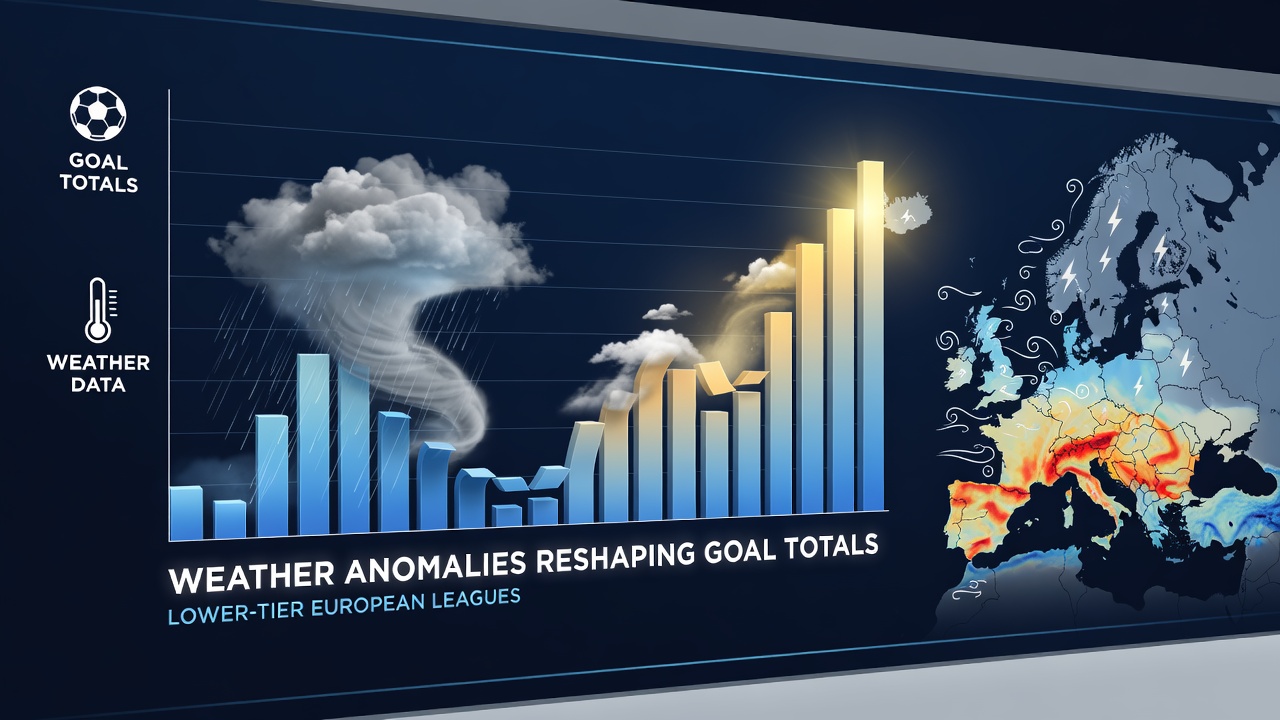
Weather patterns across Europe have shown increased variability in recent years, and data from several lower-tier leagues indicate corresponding shifts in average goals per game. Leagues in Germany, Spain, and the Netherlands below the top divisions provide clear examples where precipitation changes and temperature swings correlate with altered scoring rates, according to figures compiled by national football associations and meteorological services.
Observed Shifts in Precipitation and Pitch Conditions
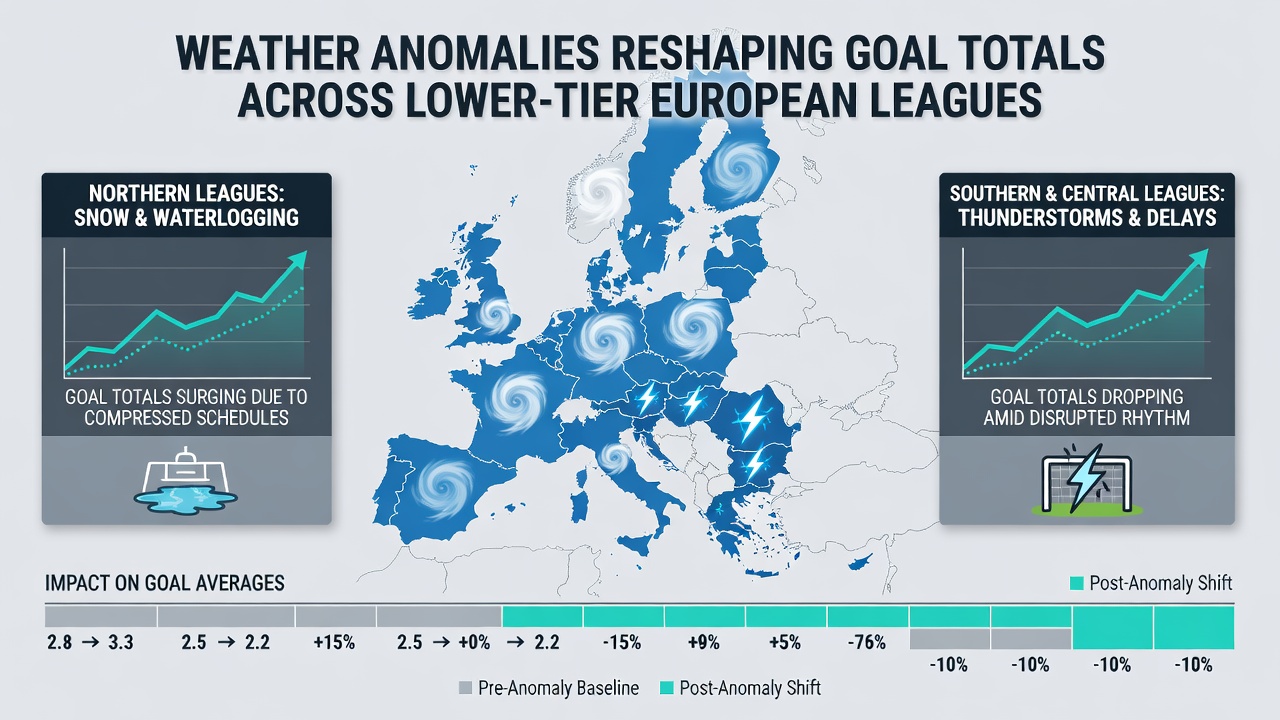
Lower divisions often play on natural grass surfaces that respond directly to rainfall amounts, and records from October 2026 show elevated precipitation in parts of northern and central Europe compared with historical averages. These conditions lead to heavier pitches that slow ball movement and reduce the number of successful through balls, which in turn affects the frequency of open-play goals. Observers note that matches in the German Regionalliga and Spanish Segunda Federación recorded fewer goals during periods of sustained rain, while drier intervals produced slight rebounds in scoring.
Soil saturation data collected by regional agricultural monitoring stations, which overlap with many club training grounds, reveal that waterlogged fields increase the risk of player slips and shorten effective playing time in forward areas. Researchers tracking these variables across multiple seasons found that goal tallies dropped by measurable margins when rainfall exceeded 20 millimeters in the 48 hours before kickoff.
Temperature Anomalies and Player Output
Temperature deviations have also appeared in match reports from southern and eastern European lower leagues, where unseasonal heatwaves or early frosts alter player endurance. In the Italian Serie C and Romanian Liga II, elevated temperatures during afternoon fixtures coincided with reduced high-intensity running distances, according to GPS data shared by several clubs. Fewer sprints translate into fewer transitions and counter-attacks, patterns that statistical models link to lower goal outputs.
Cold snaps create the opposite effect on frozen or hardened surfaces, increasing the speed of the ball and occasionally producing higher-scoring encounters when teams adapt quickly to long balls. Analysts examining fixture lists from October 2026 noted that several matches played after sudden temperature drops exceeded the seasonal goal average by more than 0.4 goals per game.
League-Specific Data Trends
Comprehensive reviews of match statistics from the Dutch Tweede Divisie demonstrate that goal averages fell from 3.12 to 2.87 during months with above-average rainfall, while similar patterns emerged in the Portuguese Liga 3. These numbers come from official match reports submitted to national federations and cross-referenced with local weather stations. The consistency across different countries suggests the effect stems from environmental factors rather than changes in squad composition or refereeing styles.
One study released by the European Environment Agency examined climate indicators alongside football performance metrics and identified stronger correlations in lower divisions than in top-flight competitions, where artificial pitches and advanced drainage systems buffer some impacts. The report highlights how smaller clubs with limited resources experience more pronounced effects from the same weather events.
Additional Factors Interacting with Weather
Travel distances in lower leagues often exceed those in elite divisions because teams rely on buses rather than flights, and weather disruptions at departure points can compound fatigue on arrival. Fixture congestion during shortened winter breaks further interacts with these conditions, as teams play on pitches that have not fully recovered from earlier storms. Data from the Polish II liga illustrates how consecutive away matches under variable weather produced wider goal margins when one side adapted better to wet conditions.
Equipment choices also play a role, with studies from the University of Copenhagen showing that different stud configurations on boots influence grip and acceleration on saturated surfaces. Clubs that rotate footwear based on forecasts tend to maintain more consistent attacking output, while those using standard boots experience greater variance in chance creation.
Broader Context from Climate Monitoring
Records maintained by the World Meteorological Organization indicate that Europe experienced a higher frequency of extreme precipitation events between 2020 and 2026, a trend that aligns with the observed changes in lower-league scoring. These patterns appear most clearly in leagues where matches occur on exposed grounds without extensive irrigation or covering systems. As a result, match schedulers in several countries have begun incorporating flexible kickoff times to avoid peak rainfall windows, though implementation remains uneven across divisions.
Conclusion
Available statistics and climate records together demonstrate that weather anomalies have coincided with measurable adjustments in goal totals across multiple lower-tier European leagues. Continued monitoring by football associations and meteorological bodies will clarify whether these shifts represent temporary fluctuations or longer-term adaptations in playing styles and pitch management.