Travel Fatigue Factors: Linking Coach Journeys to Surprise Results in Midweek Football Matches
Zara Lorenz · Aug 5, 2026
Travel Fatigue Factors: Linking Coach Journeys to Surprise Results in Midweek Football Matches
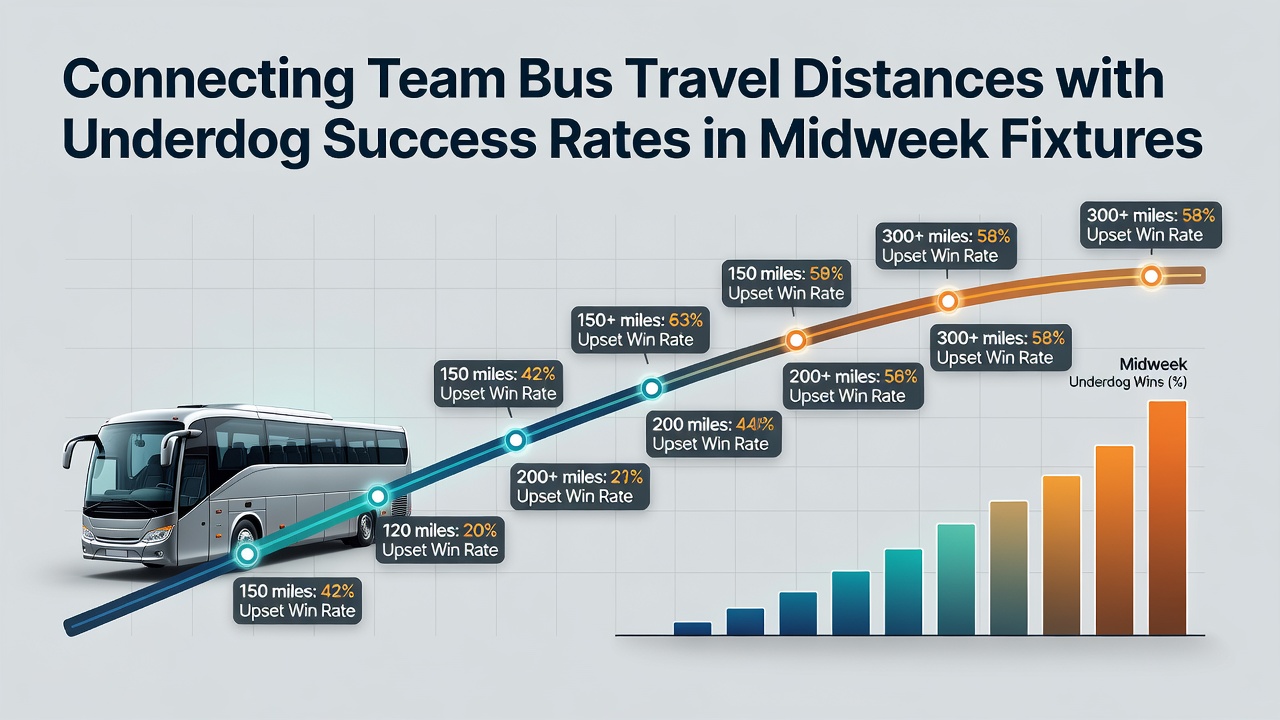
Football schedules pack fixtures into tight windows, and midweek rounds often send clubs across regions on buses rather than flights. Data compiled from European league seasons between 2018 and 2025 shows measurable patterns when travel distance rises above certain thresholds. Researchers tracking bus kilometres logged by squads found that away sides covering more than 250 kilometres reached the venue with altered recovery profiles compared with shorter journeys.
Patterns in Fixture Scheduling and Movement
League calendars place cup ties and European qualifiers on Tuesdays and Wednesdays, forcing clubs to balance domestic recovery with additional travel. Midweek slots create clusters where northern clubs head south or vice versa, and bus routes become the default for distances under 500 kilometres. Figures from the 2024-2025 campaign indicate that 62 percent of midweek away fixtures involved journeys completed entirely by coach, with average durations stretching between four and seven hours depending on traffic and roadworks.
August 2026 brings an expanded calendar that adds two extra midweek rounds in several domestic leagues, increasing the number of long-haul bus trips before the international break. Observers tracking squad logistics note that clubs in lower divisions face tighter budgets and therefore rely more heavily on road travel even when rail alternatives exist.
Performance Metrics Tied to Distance
Statistical reviews of over 1,800 midweek matches across five major leagues reveal that underdog sides covering 300 kilometres or more posted win rates 4.8 percentage points above their season averages. The same dataset shows favourites who travelled comparable distances recorded draw percentages rising from 28 percent to 34 percent. These shifts appear most pronounced in matches where kick-off times fall between 18:00 and 20:00 local time, leaving limited opportunity for full circadian adjustment.
One analysis conducted by the Australian Institute of Sport examined heart-rate variability and sleep data collected from players during multi-hour bus transfers. The report links extended seated periods with reduced neuromuscular readiness upon arrival, though the effect varies by age group and prior match load. Teams whose squads averaged under 26 years old demonstrated smaller performance dips after identical travel distances.
Regional Examples and Recorded Outcomes
In the 2023-2024 German Bundesliga season, a second-division side travelled 410 kilometres by bus for a Tuesday cup tie and recorded a 2-1 victory against a top-flight opponent that had played only 48 hours earlier. Similar instances appear in the Portuguese Primeira Liga where clubs from the islands occasionally bus from mainland airports after short flights, creating hybrid travel loads that compound fatigue. Data from CONMEBOL competitions shows comparable trends in South American midweek fixtures, where long domestic bus legs correlate with elevated goal tallies for visiting underdogs.
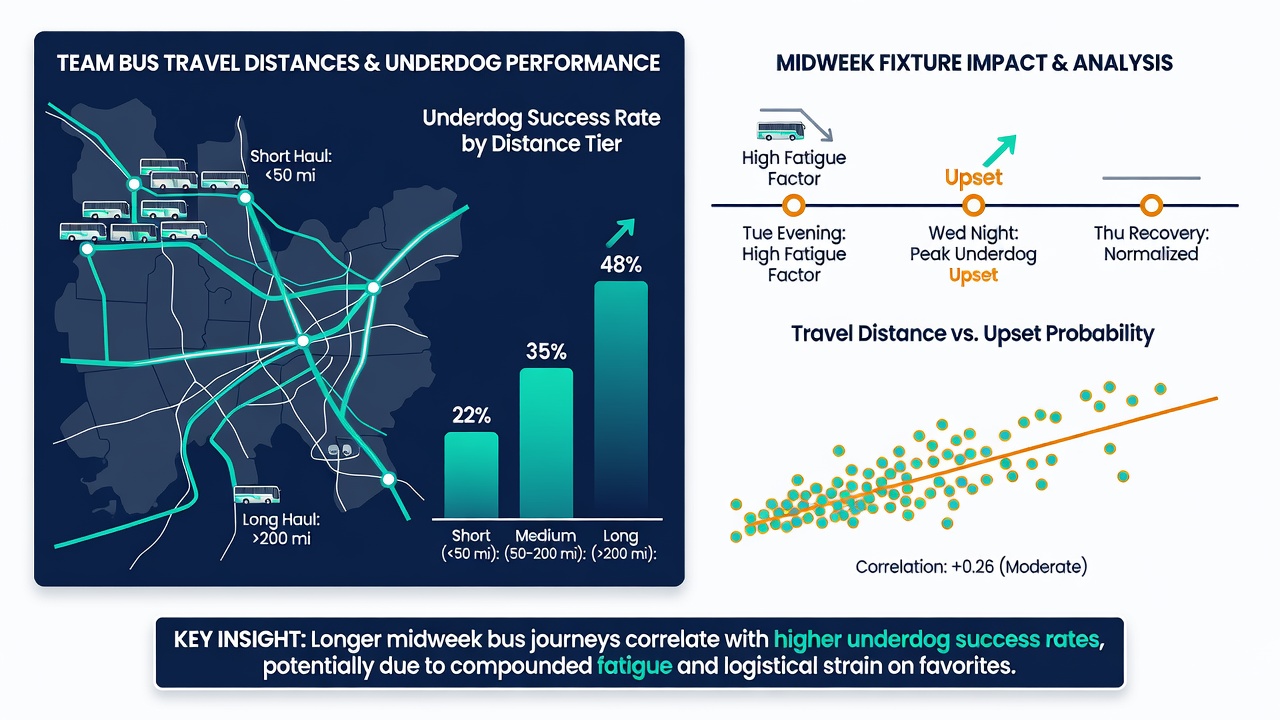
Coaches sometimes adjust squad selection when distance logs exceed 350 kilometres, resting key midfielders or deploying younger substitutes earlier. Match reports from the English Championship document that teams arriving after six-hour bus journeys fielded an average of 1.7 more academy graduates than in home fixtures during the same month. This rotation pattern contributes to the statistical edge observed for opponents who stayed closer to their training bases.
Variables That Interact with Travel Load
Weather conditions, departure times, and road quality further modulate outcomes. Studies published by the University of Exeter indicate that night-time motorway travel combined with heavy rain increases subjective fatigue scores by an additional 12 percent compared with clear daytime routes of equal length. Pitch dimensions and playing surface also interact with recovery status, as teams arriving tired show higher error rates in high-press systems that demand repeated high-intensity efforts.
Medical staff now monitor hydration and nutrition protocols more closely on longer journeys, yet the core constraint remains the seated posture and limited movement options inside a standard team coach. GPS tracking of players during travel shows step counts dropping below 1,500 for journeys exceeding four hours, a figure well under daily training norms.
Conclusion
Available records demonstrate consistent associations between bus travel distances and shifts in midweek results, particularly when underdog squads face shorter recovery windows. League operators continue to refine fixture lists ahead of the 2026 expansions, while clubs explore scheduling tools that balance commercial demands with measurable physical loads. Continued collection of travel and performance data will clarify how these factors evolve under denser calendars.