Tracking Travel Fatigue Patterns Across Multi-Timezone Football Fixtures for Margin Adjustments
Logan Sullivan · Jun 5, 2026
Tracking Travel Fatigue Patterns Across Multi-Timezone Football Fixtures for Margin Adjustments
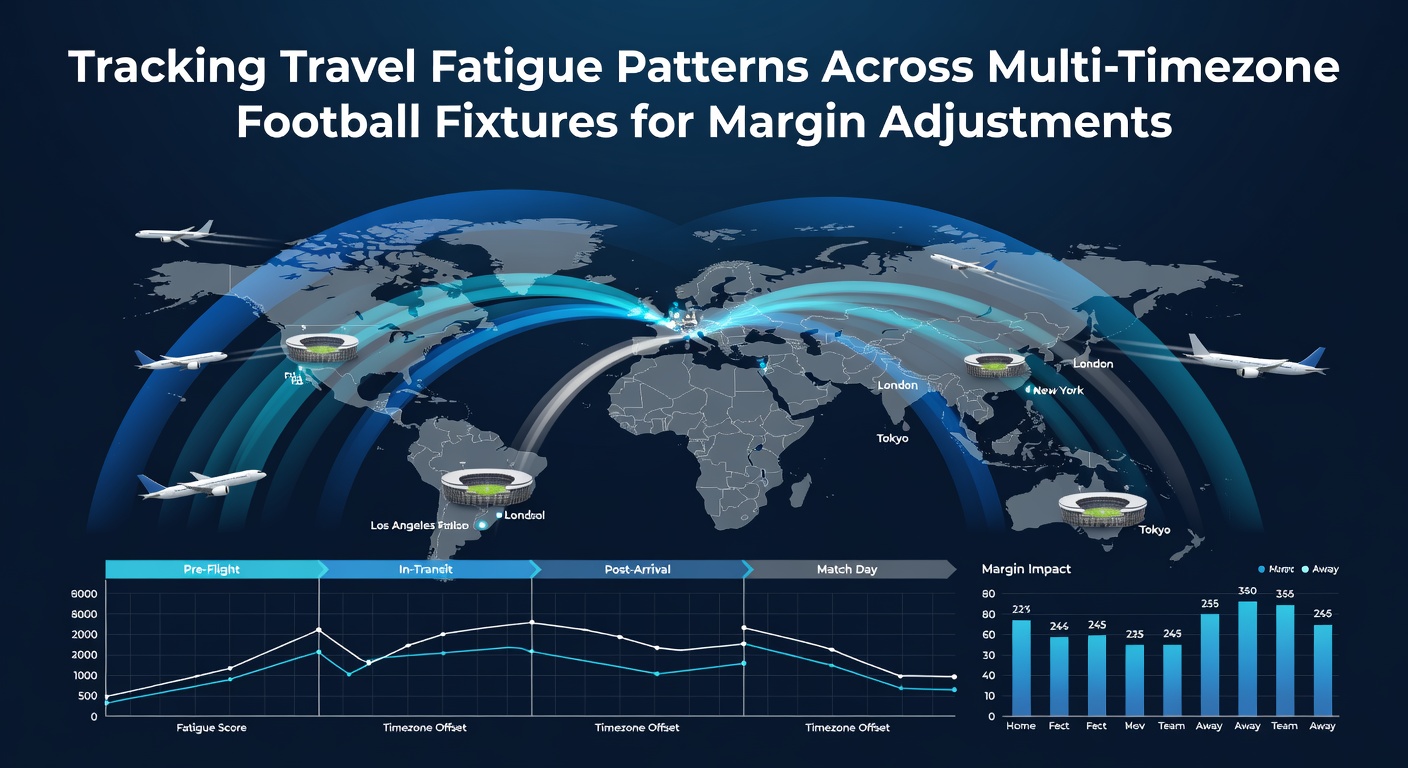
Football teams crossing multiple time zones face measurable disruptions to sleep cycles, recovery rates, and match-day performance, and analysts track these patterns to refine betting margins on fixtures involving long-distance travel. Data from recent seasons shows that squads traveling eastward across five or more zones experience slower adaptation than those heading westward, with performance dips appearing most clearly in the first 72 hours after arrival.
Documented Effects on Player Metrics
Researchers collect heart-rate variability readings, GPS workload data, and sleep-tracking outputs from clubs participating in intercontinental competitions, and these datasets reveal consistent reductions in high-intensity running when fixtures occur within three days of a transatlantic or transpacific journey. Teams that land in the host city less than 48 hours before kickoff post average drops of 8 to 12 percent in total distance covered at sprint speeds compared with home fixtures, according to aggregated figures released by European club performance departments.
Eastward travel produces sharper circadian misalignment because the body clock must advance rather than delay, and studies compiled by sports-science groups in Australia and Canada confirm that eastward shifts of six hours or more correlate with elevated perceived exertion scores during training sessions held on the second day post-arrival. Westward movement allows partial alignment with natural daylight cues, which softens the initial fatigue spike yet still leaves residual effects visible in the second half of matches.
Fixture Scheduling and Recovery Windows
June 2026 marks the start of an expanded international club window that places several high-profile matches in North America and Asia within the same fortnight, forcing multiple European sides to navigate back-to-back long-haul legs. Scheduling models now incorporate minimum rest thresholds that account for time-zone differentials, and governing bodies have begun publishing preliminary recovery guidelines ahead of the expanded calendar.
Clubs that receive at least four full days between arrival and match kickoff demonstrate rebound patterns closer to baseline levels, whereas shorter turnarounds leave measurable gaps in both defensive organization and set-piece conversion rates. Analysts cross-reference these recovery windows against historical results to adjust margin calculations on individual games.
Data Integration for Margin Refinement
Betting operators integrate travel-fatigue indicators into algorithmic pricing engines by layering flight-distance metrics, direction of travel, and recovery-day counts onto existing form and squad-rotation variables. One dataset released by a North American sports analytics firm shows that teams arriving after eastward flights of eight hours or longer cover 6.4 percent fewer successful passes in the opening 30 minutes when playing within 60 hours of landing.
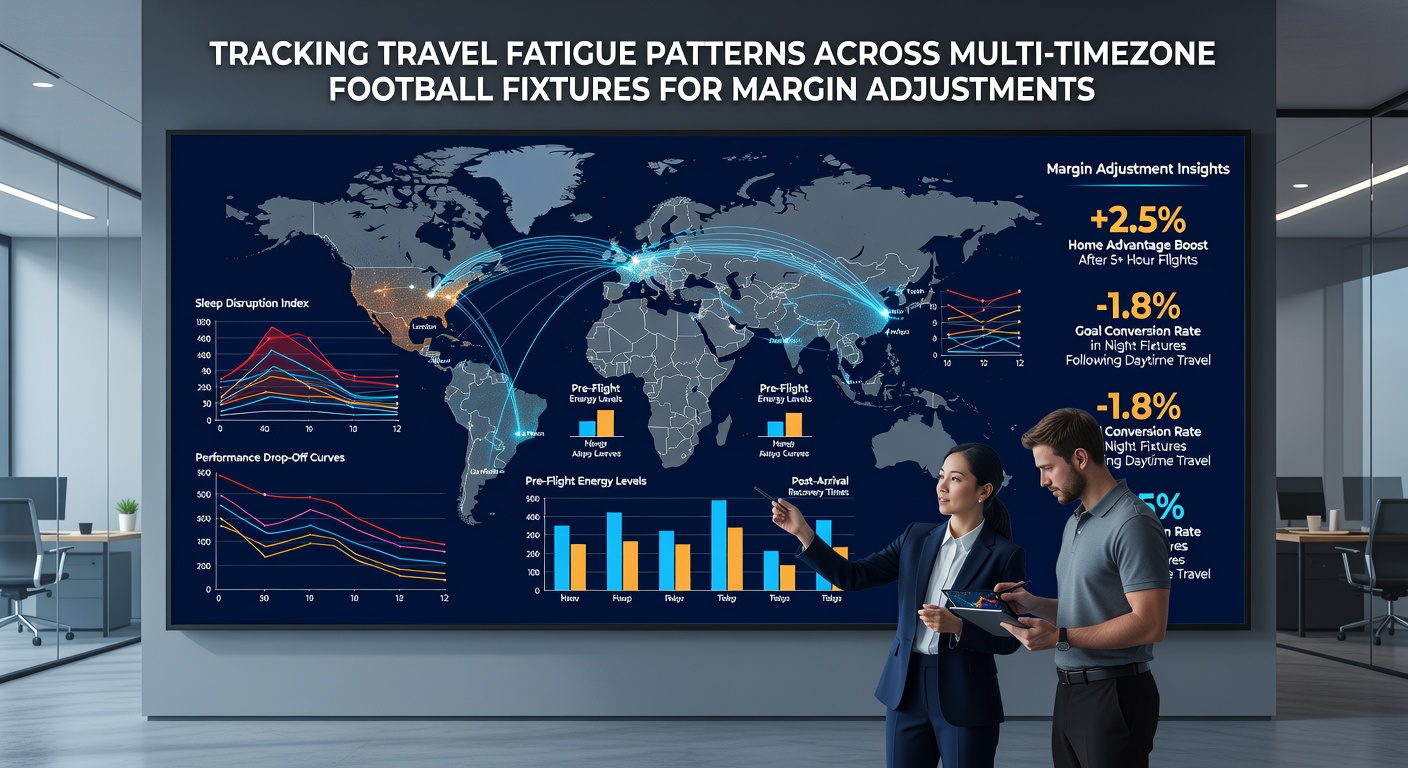
These granular inputs allow lines to shift incrementally rather than through broad-brush adjustments, and the approach reduces over-correction on matches where home advantage and travel fatigue partially offset each other. External sources such as reports from the Aspetar Orthopaedic and Sports Medicine Hospital provide additional benchmarks on hydration loss and inflammatory markers that correlate with multi-zone travel, supplying independent reference points for model calibration.
Regional Variations and Competition Context
Fixtures between South American and European clubs produce distinct fatigue signatures because of combined altitude and time-zone stressors, and performance logs from Copa Libertadores participants illustrate steeper second-half declines when matches occur in high-elevation venues after transatlantic crossings. Observers note that Asian-based teams traveling to South America encounter the reverse pattern, with westward flights followed by rapid descent into thinner air amplifying recovery demands.
League-specific rules on minimum rest periods influence how sharply margins move, and competitions that enforce five-day recovery windows show smaller travel-related variance than those permitting shorter intervals. Analysts therefore weight fixture lists according to both geographic distance and regulatory rest mandates when updating pre-match probabilities.
Conclusion
Systematic collection of travel-related biometric and performance data supplies clubs, analysts, and pricing teams with repeatable indicators that refine margin calculations across multi-timezone football schedules. Continued expansion of global calendars through 2026 will increase the volume of such fixtures, and organizations that maintain consistent tracking protocols stand to improve the precision of expected-outcome models.