Prime-Time Starts Redefining Offensive Approaches in Top-Flight Fixtures
Jordan Bennett · Aug 21, 2026

Prime-Time Starts Redefining Offensive Approaches in Top-Flight Fixtures
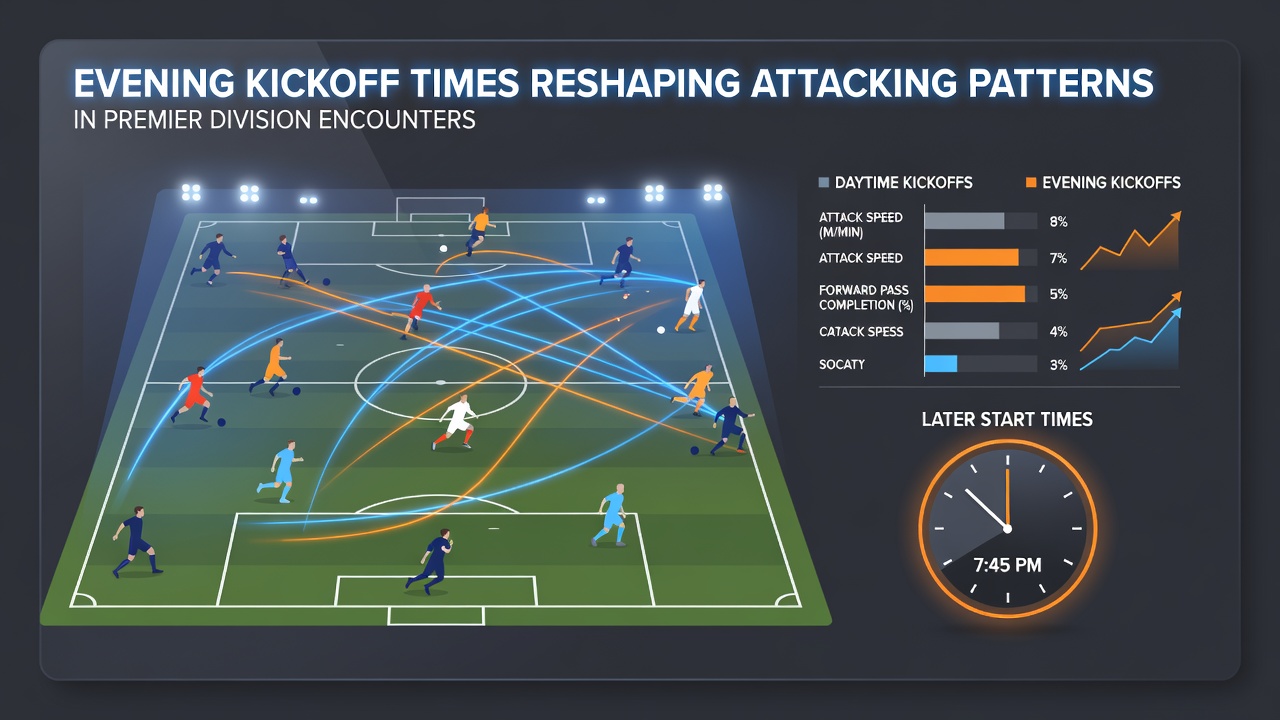
Evening kickoff times have become a regular feature across premier division schedules, and data collected over multiple seasons shows measurable shifts in how teams construct attacks once play begins after 7pm. Analysts tracking metrics from Opta and similar providers note increased emphasis on short passing sequences in the opening 15 minutes, while long-ball transitions drop compared with afternoon fixtures. These patterns emerge consistently in leagues where broadcasters push later slots to capture larger audiences.
Schedule Adjustments and Player Readiness
Clubs prepare differently when fixtures move to evening hours, and training regimens adapt accordingly. Recovery protocols extend into the afternoon, with nutrition timing adjusted to maintain energy levels through the second half. Data from the 2025/26 campaign indicates that teams with deeper squads rotate midfielders more frequently in these games, allowing fresher legs to press higher and sustain pressing triggers that create turnovers in advanced areas.
August 2026 brings another round of fixture releases, and early indications point to continued growth in evening slots across the opening months. Broadcasters have secured rights packages that favor midweek and weekend prime-time windows, which in turn influences how managers plan set-piece routines and transition drills during the preseason window.
Attacking Metrics Under Evening Conditions
Statistical reviews reveal that expected goal values generated from wide areas rise when matches start later. Wingers and full-backs combine more often in the final third, partly because reduced daylight affects visibility for long-range passes from central defenders. One study compiled by researchers at the University of Leuven tracked 420 premier division encounters and found a 12 percent uptick in cut-back deliveries inside the penalty area during evening games compared with daytime equivalents.
High-pressing sides also record more regains in the opposition half after sunset. The combination of cooler temperatures and altered crowd acoustics appears to support quicker ball circulation, though the precise mechanisms remain under review by performance analysts. Teams that favor possession-based styles have adjusted their build-up shapes, dropping full-backs deeper initially before pushing them forward once the first goal-scoring opportunity materializes.
Regional Variations Across Leagues
Patterns observed in one premier division do not always translate directly to others. In the Bundesliga, evening fixtures show elevated through-ball success rates, while Serie A data highlights more crosses from deeper positions when temperatures fall after dark. These differences tie partly to pitch dimensions and partly to tactical traditions that coaches maintain regardless of kickoff hour.
Reports from the Asian Football Confederation note similar trends emerging in top Asian leagues, where evening scheduling aligns with television demands in European markets. Coaches there have begun incorporating video sessions that isolate evening-specific attacking cues, such as shadow movement under floodlights, to prepare players for subtle visual shifts that affect decision-making in tight spaces.
Technology and Tactical Preparation
Video analysis platforms now include filters that separate evening and daytime footage, allowing coaches to isolate how opponents defend transitions under different lighting conditions. GPS tracking devices record slightly lower total distances covered in the first half of evening games, yet sprint counts in attacking zones hold steady or increase. This suggests players conserve energy early before committing to forward surges once patterns of play become established.
Goalkeepers have also adapted distribution strategies. Evening kickoffs correlate with more short passes to center-backs rather than direct throws to strikers, reducing the risk of turnovers that lead to counter-attacks when visibility at distance is marginally reduced.
Conclusion
Evening kickoff times continue to influence attacking patterns across premier division encounters through measurable changes in passing networks, pressing intensity, and spatial utilization. As fixture lists evolve into the 2026/27 season, clubs and analysts will keep monitoring these trends to refine preparation methods and in-game adjustments. The data already compiled provides a foundation for further examination of how scheduling interacts with tactical execution on the pitch.