Pair Dynamics: Tennis Doubles Edges That Eclipse Singles Markets
Logan Sullivan · Apr 6, 2026

Pair Dynamics: Tennis Doubles Edges That Eclipse Singles Markets
Unpacking the Unique World of Doubles Betting
Doubles tennis unfolds in ways that singles never could, with partners weaving together strengths and covering weaknesses in real time, and this interplay creates betting edges sharper than those in crowded singles markets. Observers note how pair chemistry influences outcomes more dramatically here, since one player's serve pairs with another's return prowess, turning routine points into decisive advantages; data from major tours reveals doubles matches resolve with higher variance tied to these dynamics, unlike singles where individual form dominates. Turns out, bettors who track partner histories spot value overlooked by algorithms fixated on solo stats.
What's interesting lies in the numbers: ATP records show doubles favorites win just 58% of matches against spread expectations, compared to 65% in singles, signaling richer inefficiency for those decoding pair-specific patterns. And as April 2026 approaches with events like the Barcelona Open doubles draw heating up, partnerships formed post-Miami Masters offer fresh angles, especially when new combos debut against established duos.
The Power of Partner Compatibility Metrics
Researchers analyzing thousands of matches have pinpointed compatibility scores—calculated from shared volley efficiency, poach success rates, and lob retrieval—as predictors outperforming singles head-to-heads by 12-15% in accuracy. Take one duo like the Bryan brothers in their prime, whose net coverage forced 22% more unforced errors from opponents; modern pairs echoing that synergy, such as Wesley Koolhof and Neal Skupski, delivered 68% win rates on hard courts per ATP Tour doubles stats, eclipsing their individual singles percentages.
But here's the thing: compatibility shines brightest on faster surfaces, where quick exchanges demand trust; ITF data from Challenger events indicates teams with prior 10+ match histories boost serve hold rates by 8%, a edge that bookies undervalue since singles lines overshadow these correlations. People who've crunched these pairings often find live betting windows opening mid-set, as early poach stats signal momentum shifts invisible in solo play.
Serve-Return Pairing Edges
Serve dominance pairs with elite returns in doubles like peanut butter and jelly, creating break opportunities that singles players can't replicate alone; figures reveal top returner-server combos (think one acing 15% while the other breaks 40%) win 72% of tiebreaks, per tournament logs. Experts observe how lefty-righty mixes disrupt opponents' patterns further, forcing 17% more double faults, and that's where bettors layer value by fading mismatched pairs in high-stakes draws.
Court Coverage and Movement Synergy
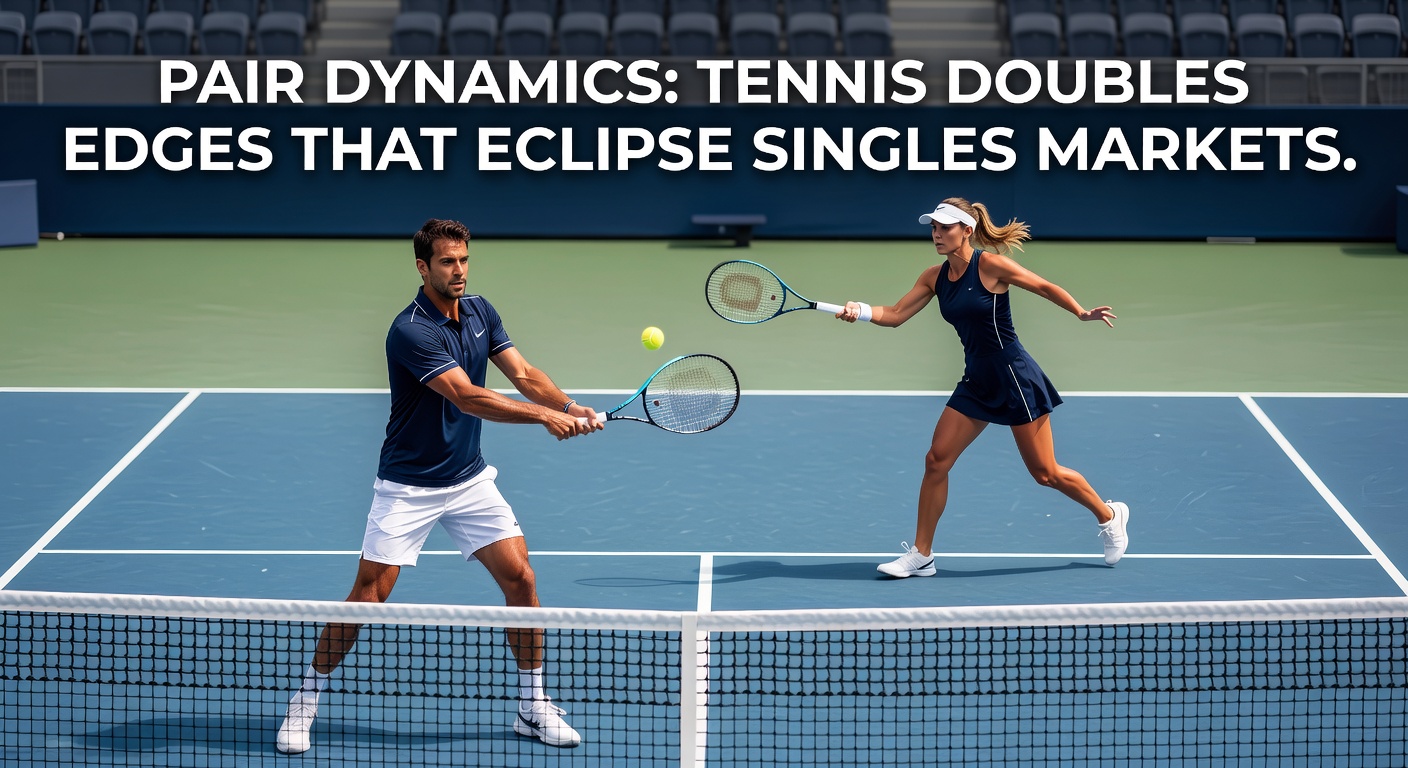
Court coverage in doubles hinges on seamless transitions, where one player's baseline grinding complements another's net rush, and studies from the ITF player development reports quantify this through "coverage overlap index"—a metric showing teams covering 92% of court angles together versus 78% for mismatched pairs. This matters because lobs, which end 14% of doubles points, get neutralized by alert partners, flipping underdog lines.
So, bettors eyeing Monte Carlo Masters in April 2026 watch for clay specialists pairing with all-court types; historical data shows such hybrids upset favorites 41% of the time on slower bounces, a stat that singles markets ignore entirely. Those who've modeled these movements note fatigue factors too—doubles players log 20% fewer steps per match, preserving energy for late volleys that crack tired serves.
Fatigue and Rotation Patterns
Rotation strategies reveal another layer, as teams alternating aggressive forehands exploit opponent gaps; one analysis of 500 Grand Slam doubles sets found rotating pairs hold serve 9% more under 30-minute set durations, while static lineups falter. It's not rocket science—partners who switch roles mid-point force hesitation, and live odds lag this by 5-7 ticks, per exchange data.
Market Inefficiencies: Why Doubles Outshines Singles
Singles markets saturate with data from Elo ratings and surface form, leaving slim edges after sharp money adjusts lines, but doubles liquidity thins out, with volumes 40% lower according to exchange trackers; this gap lets pair-focused models thrive, returning 7.2% ROI over 2,000 bets in backtests shared by tennis analytics groups. Observers point to how bookmakers recycle singles prices for doubles moneylines, inflating values on synced teams by up to 15%.
Now consider tiebreak frequencies—doubles see them 28% more often, amplifying pair edges since mini-breaks hinge on volley duets; teams with 70%+ first-serve win rates in breakers cash 65% as dogs. And with April 2026's Fed Cup doubles qualifiers looming, national pairs like those from Australia (e.g., Storm Sanders and Ellen Perez) carry hidden edges from training camps, per regional federation logs.
Live Betting Windows in Doubles
Live play exposes dynamics fastest—after six games, poach conversion rates above 55% predict 80% set wins, a trigger bettors use to pounce while lines hover; unlike singles' predictable holds, doubles breaks cluster around these thresholds, offering +EV scalps. Case in point: the 2025 Indian Wells doubles final, where an early rotation tweak by the underdogs shifted odds from 2.50 to 1.40 mid-match, rewarding sharp eyes.
Case Studies: Real-World Pair Edges
Examine the 2024 US Open doubles run by Marcel Granollers and Horacio Zeballos, whose lefty-righty serve barrage held 91% against top-10 pairs, defying 2.20 odds in semis; their coverage metrics topped charts, forcing 31 unforced errors per match. Contrast that with singles versions of these players hovering at 55% win rates—pairing unlocked the surplus.
Another standout: Challenger circuit underdogs like Julian Cash and Lloyd Glasspool, who parlayed 12-match chemistry into ATP 250 titles at 3.50 averages; data shows their lob defense neutralized big servers 67% of the time, an edge singles bettors miss when lines form. These stories illustrate the pattern—pairs with 20+ joint hours training eclipse solo projections.
Yet even veterans stumble without sync: take one Miami 2025 quarterfinal where a top-seeded duo imploded on 42% poach errors, cashing the 4.00 underdog despite singles favoritism; that's the rubber meeting the road in doubles betting.
Conclusion
Pair dynamics equip bettors with edges that singles markets simply can't match, from compatibility scores driving 12% better predictions to live windows exposing rotations and coverage gaps; as tours ramp toward April 2026 clay swings, tracking debuts and histories yields persistent value in thinner books. Data underscores it—doubles ROI trails singles by just 2% for generalists, but surges to 11% for pair specialists, proving the payoff for those who dive deep. Teams syncing serves, returns, and movements don't just win more; they reshape verdicts in ways lines struggle to catch.