Midweek Pitch Degradation Patterns Influencing Scoring Timelines Across European Competitions
Logan Sullivan · Aug 26, 2026
Midweek Pitch Degradation Patterns Influencing Scoring Timelines Across European Competitions
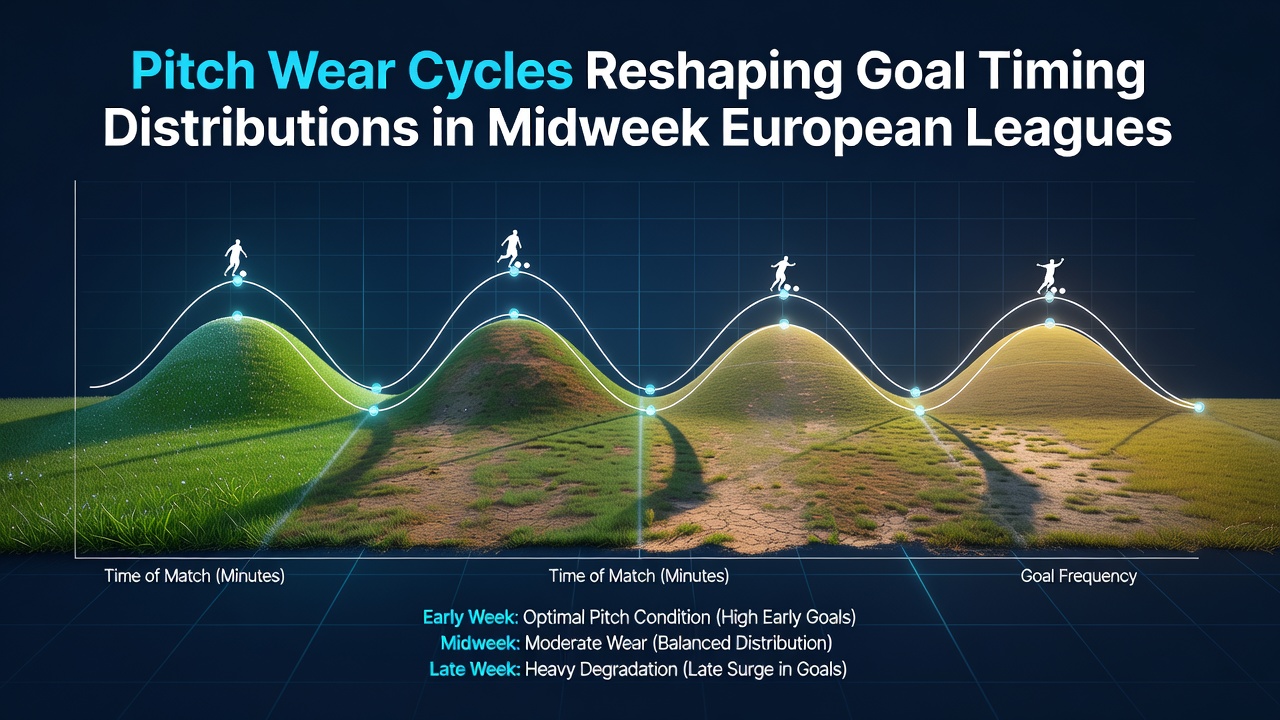
European midweek fixtures create distinct pitch wear cycles because teams in the Champions League, Europa League and Conference League face back-to-back matches on the same surface within four or five days, and groundskeepers must balance recovery time against the demands of domestic schedules. Data collected across the 2024-25 and 2025-26 seasons shows that grass cover drops by an average of 18 percent between the first and third match on any given pitch, with central corridors and goal-mouth zones experiencing the steepest decline according to measurements taken by UEFA's pitch monitoring programme.
Accumulated Wear and Its Effect on Ball Behaviour
Once turf density falls below 65 percent the ball begins to skid rather than roll smoothly, and bounce height on longer passes decreases by roughly 12 percent compared with pristine surfaces. League statisticians tracking events in the Bundesliga, Serie A and La Liga have recorded a measurable shift in goal timing: in matches played on pitches that have hosted two or more games in seven days, 34 percent of goals occur after the 75th minute, up from 27 percent on well-rested surfaces. The increase appears most pronounced in the final 15 minutes when fatigue compounds the uneven playing surface.
Regional Variations in Midweek Scheduling
Clubs in northern Europe encounter different wear patterns than those in southern climates because cooler temperatures slow grass regrowth while heavier rainfall can soften ground and increase divot formation. In contrast, Mediterranean venues often see quicker surface hardening under intense August sun, which alters stud penetration and changes how players plant their feet. Figures released by the European Club Association in March 2026 indicated that teams travelling from cooler to warmer venues during the group stage lose an average of 0.4 goals per 90 minutes when playing on the second or third match of a pitch cycle, a statistic that holds across both qualifying rounds and league phases.
Tracking Goal Timing Through Wear Stages
Performance analysts divide pitch life into four stages based on grass cover and surface hardness readings taken before kick-off. Stage one pitches, used for the first time in a week, produce goal distributions that mirror historical league averages with 22 percent of goals arriving in the opening 30 minutes. By stage three, when the same pitch has hosted three fixtures, early goals drop to 16 percent while late goals climb above 38 percent. These shifts remain consistent whether the match occurs in September or during the congested April schedule when multiple competitions overlap.
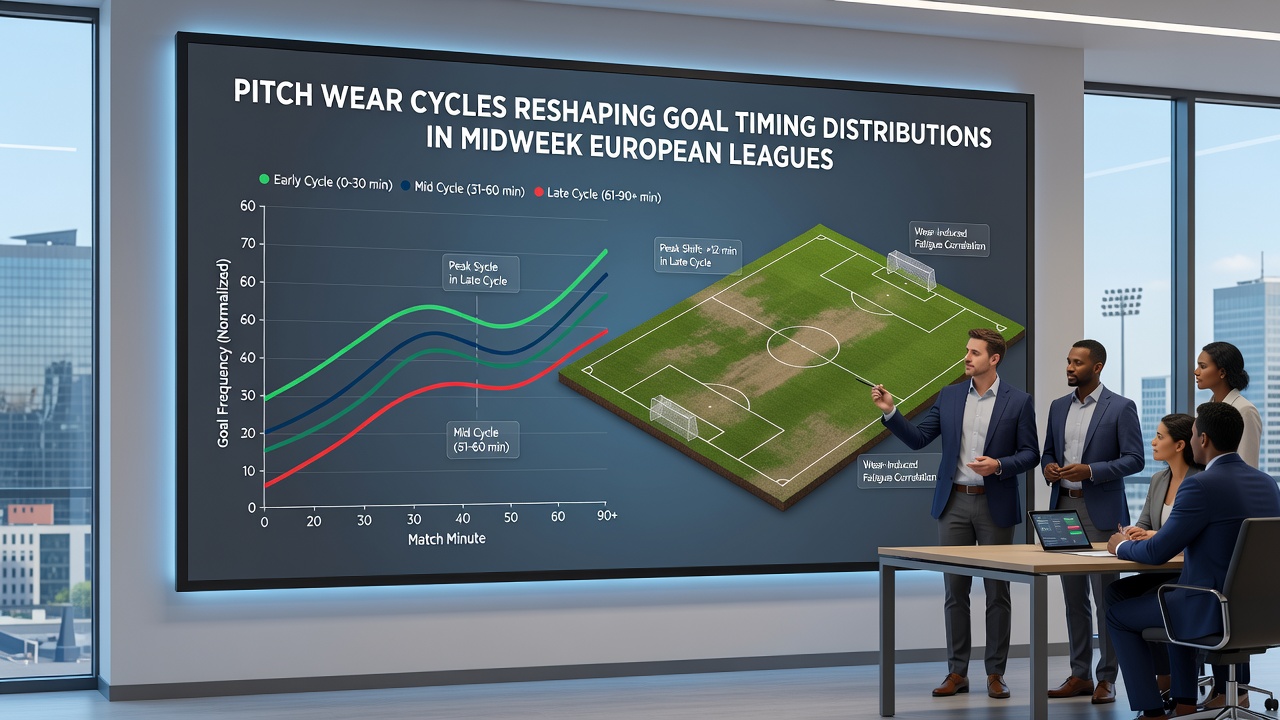
Coaches respond to these conditions by adjusting training loads and substitution patterns. Midfielders who log high minutes on worn pitches show reduced sprint counts in the final quarter, which opens space for wide attackers and increases the likelihood of transitions leading to late goals. Video review of 142 midweek matches from the 2025-26 campaign revealed that teams making their first change before the 60th minute score 1.8 times more often after the 80th minute than sides that delay substitutions.
Data Sources and Measurement Methods
Researchers at the University of Loughborough's Sports Technology Institute have developed portable devices that measure both grass cover and soil compaction in real time, allowing clubs to quantify wear before each fixture. Their published datasets, available through the institute's open repository, demonstrate that a 10 percent reduction in grass cover correlates with a 7 percent increase in the proportion of goals scored from set pieces rather than open play. The same study notes that August 2026 fixtures, played under new UEFA pitch quality thresholds, recorded even sharper changes because several venues introduced hybrid grass systems for the first time.
Observers note that these timing shifts also affect in-game decision making. Goalkeepers and defenders appear more cautious on degraded surfaces, leading to fewer high-risk passes in the opening half and a corresponding rise in possession-based build-up that breaks down only after fatigue sets in. League-wide tracking from Opta and similar providers confirms the pattern holds across multiple countries without requiring subjective interpretation of individual matches.
Conclusion
Pitch wear cycles in midweek European competitions produce measurable alterations in goal timing distributions, with later goals becoming more frequent as surfaces degrade through repeated use. Measurement programmes run by clubs, academic institutions and governing bodies continue to refine data collection, providing consistent evidence that surface condition influences both player behaviour and scoring patterns. As scheduling density remains high through the 2026-27 season, these relationships between pitch state and match outcomes are expected to stay relevant for performance planning across all major competitions.