International Breaks and Their Mark on Midweek Club Football Predictions
Avery Hansen · May 22, 2026
International Breaks and Their Mark on Midweek Club Football Predictions
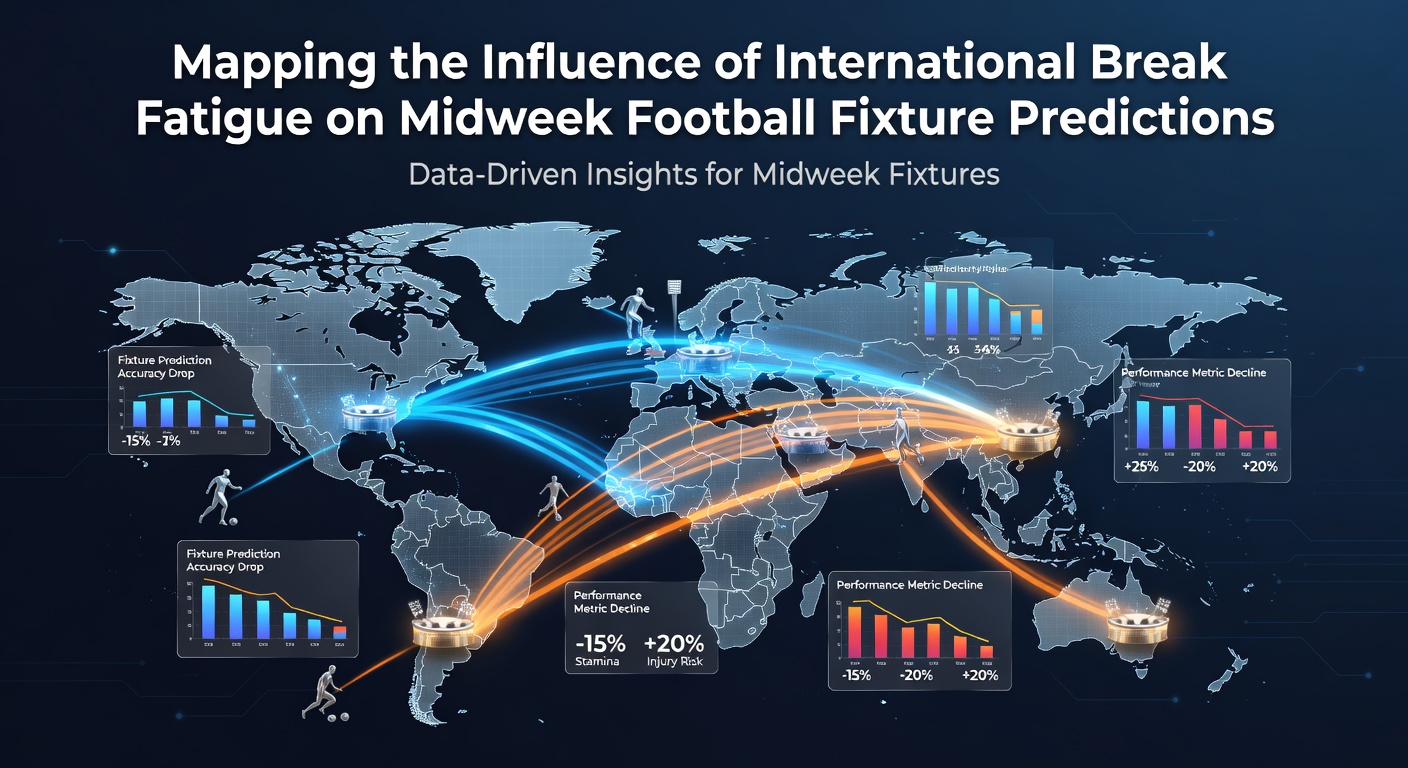
International breaks disrupt club schedules in ways that create measurable shifts in player readiness, and analysts track these patterns closely when building forecasts for midweek fixtures across major European leagues. Players often travel long distances, compete in high-intensity matches for their national teams, and then return with limited recovery time before resuming domestic duties, which alters performance baselines in predictable directions.
Understanding the Recovery Timeline After National Team Windows
Clubs typically receive players back just a few days before a midweek league or cup match, and data collected over multiple seasons shows that full physiological recovery rarely completes within that window. Researchers from sports science programs in Australia and Canada have documented elevated markers of muscle damage and reduced sprint output in the first 72 hours post-international duty, while teams in the Bundesliga and Premier League face the added pressure of congested calendars that leave little room for extra rest protocols.
Coaches adjust training loads accordingly, yet the compressed timeline still produces measurable effects on match statistics such as total distance covered, high-intensity runs, and duel success rates. These changes feed directly into prediction models that weigh recent form more heavily than historical averages when an international window precedes a midweek round.
Performance Metrics That Shift Most Noticeably
Studies tracking elite players reveal consistent dips in key indicators during the first club match after a break, with midfielders and full-backs often showing the largest declines because of their high workload in both national and club systems. Goal-scoring rates for forwards can dip as well, particularly when the preceding international window included multiple matches or long-haul flights, whereas goalkeepers display more stable metrics that make their contributions easier to forecast.
One detailed review of five European leagues across three seasons found that teams with four or more players returning from international duty posted lower expected goal totals in midweek fixtures compared with matches played without such interruptions. Observers note that defensive organization sometimes suffers first, leading to slightly higher concession rates until squad rotation and tactical tweaks restore balance in subsequent games.
League-Specific Patterns and Scheduling Realities
The Premier League and La Liga publish fixture lists that frequently place high-stakes midweek rounds immediately after FIFA or UEFA international dates, and analysts incorporate travel distance data plus the number of minutes played for each nation when refining their models. In contrast, Serie A and Ligue 1 sometimes benefit from slightly longer gaps, yet the overall trend remains that fatigue accumulates faster in leagues with larger numbers of players selected for major national teams.
During May 2026 several clubs will navigate the final international window of the season before crucial European and domestic deciders, which means prediction frameworks will once again adjust for shortened preparation periods and potential squad rotation by managers seeking to protect key assets ahead of title or relegation battles.
How Prediction Models Incorporate Fatigue Variables
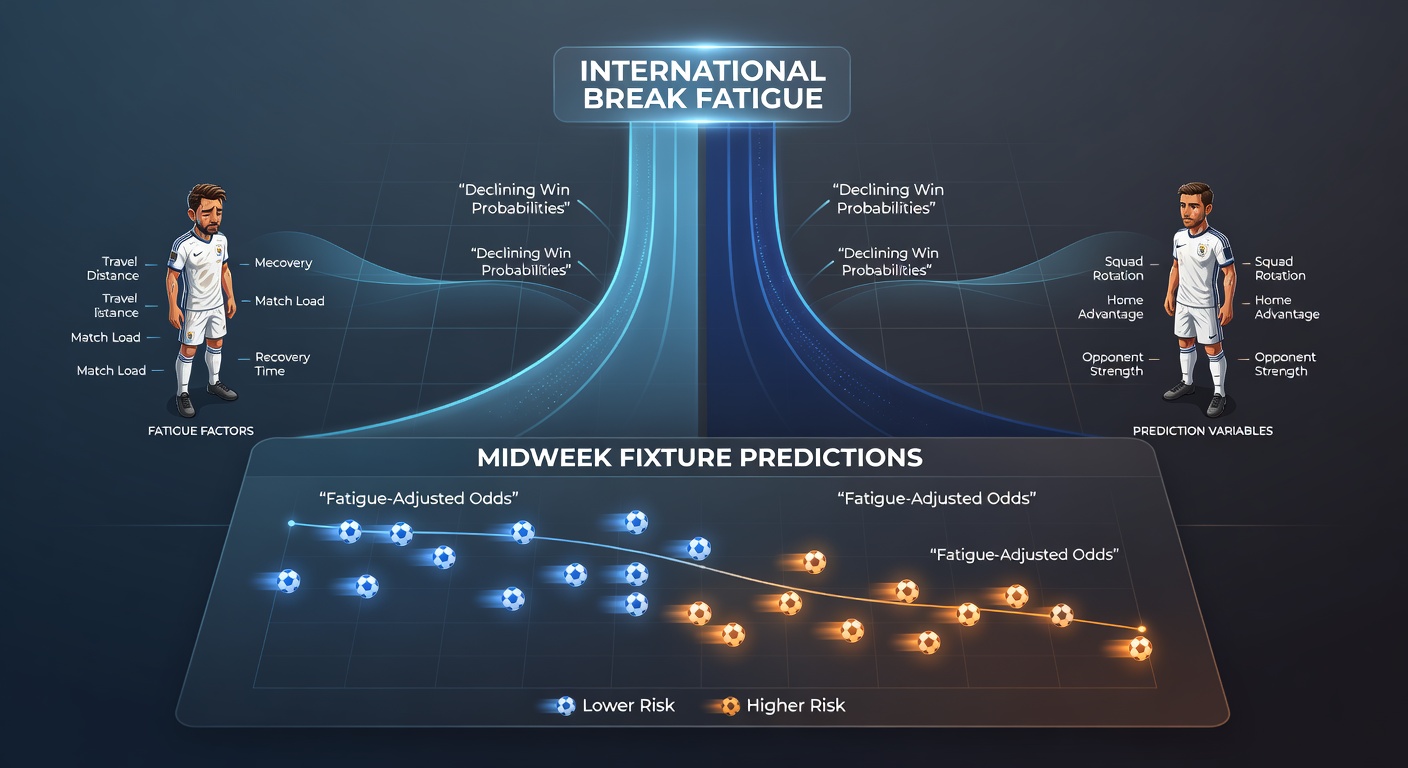
Modern forecasting systems integrate variables such as cumulative international minutes, flight times, and positional workload into machine-learning pipelines that generate probability estimates for midweek outcomes. These models assign lower weights to recent club form when multiple starters have just returned from national team commitments, and they elevate the importance of historical post-break statistics instead.
Teams that maintain deep squads often mitigate these effects through rotation, yet even then the collective impact of reduced sharpness across several positions can tilt expected points totals. Data shared by academic groups in the United States and the Netherlands highlights that clubs with superior recovery facilities and sports science support sometimes neutralize fatigue advantages more effectively than smaller-budget sides.
Betting markets and media forecasters gradually absorb these patterns as well, with odds compilers adjusting lines for total goals and clean-sheet probabilities when international breaks precede midweek rounds. The adjustments remain data-driven rather than speculative, relying on multi-year samples that separate genuine fatigue signals from random variance.
Future Directions in Fatigue Research and Forecasting
Continued advances in wearable technology and GPS tracking now allow clubs and analysts to monitor individual recovery curves in real time, which should sharpen the precision of midweek fixture predictions over the coming seasons. Collaborative projects between universities and professional leagues continue to refine the variables that matter most, from sleep disruption during travel to the specific demands of different playing positions.
As calendars grow denser with expanded club competitions, the ability to map international-break fatigue onto domestic results will remain a central component of accurate forecasting rather than an optional refinement. Observers expect that improved data granularity will further separate the influence of travel, match load, and psychological factors in future models.
Conclusion
International breaks introduce systematic changes to player availability and performance that prediction frameworks now quantify with increasing accuracy, and midweek fixtures continue to serve as the clearest testing ground for these effects. By combining travel data, workload metrics, and historical outcomes, analysts produce forecasts that reflect the real constraints clubs face when players return from national-team duty.