How High Altitudes Alter Goal Patterns in South American Soccer Leagues
Avery Hansen · Jul 24, 2026
How High Altitudes Alter Goal Patterns in South American Soccer Leagues
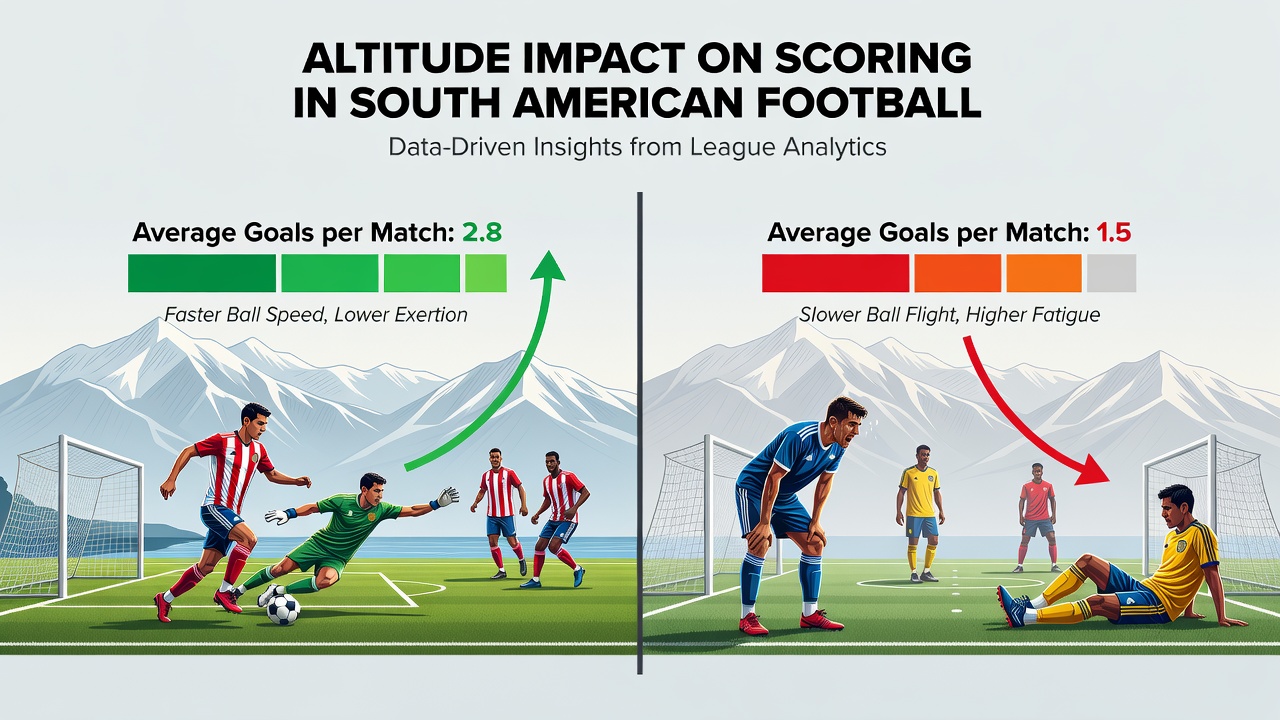
High-altitude venues across South America create measurable shifts in scoring during league matches, and data from multiple seasons illustrate consistent patterns tied to elevation. Researchers tracking Bolivian Primera División games report that matches played above 2,500 meters feature elevated goal tallies in the first half compared with sea-level fixtures, while second-half tallies often stabilize as visiting squads adapt to reduced oxygen levels.
Physics of the Ball at Elevation
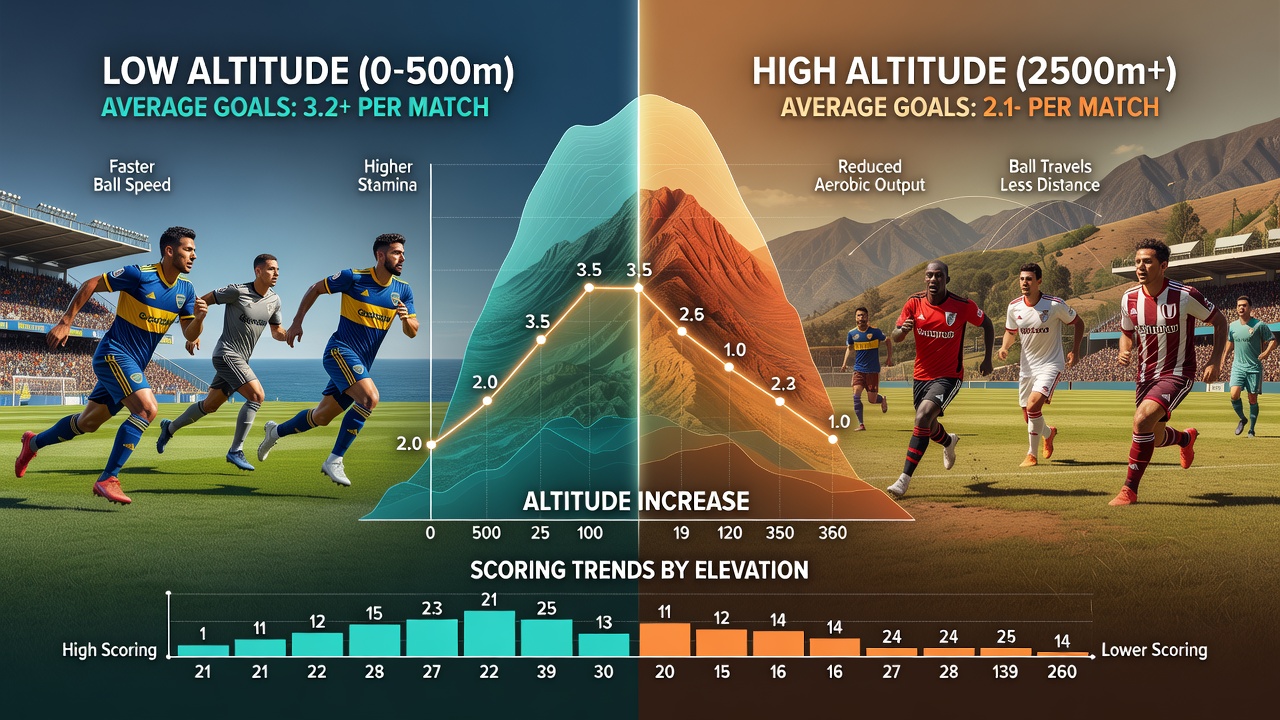
Thinner air at altitude reduces drag on the ball, allowing it to travel farther and faster when struck with the same force, and studies from sports science laboratories in Argentina and Brazil confirm that shots from outside the penalty area reach the net more frequently under these conditions. Teams based in La Paz, Quito, and Cusco therefore record higher long-range goal percentages during home fixtures, whereas opponents accustomed to denser air at lower elevations adjust their shooting angles and power only after several minutes of play.
Player Physiology and Fatigue Curves
Visiting players experience quicker onset of fatigue because oxygen uptake drops sharply above 3,000 meters, and heart-rate data collected during Copa Libertadores ties show elevated readings within the opening twenty minutes for squads traveling from coastal cities. Home teams in these environments maintain higher work rates throughout the ninety minutes, and league statistics indicate they convert more counter-attack opportunities once opponents begin to tire. Training protocols used by clubs such as Bolívar and Barcelona SC incorporate altitude simulation to mitigate these effects, yet visiting sides rarely match the same level of preparation.
League-Specific Scoring Trends
Bolivian league records from 2023 through 2025 reveal an average of 3.4 goals per match at venues over 3,000 meters versus 2.7 goals at lower-altitude Bolivian grounds. Ecuadorian Serie A matches in Quito display similar spikes, particularly during evening kickoffs when temperatures drop and air density decreases further. Peruvian and Colombian leagues show smaller but statistically significant upticks in total goals during away games for teams descending from Andean bases, and analysts attribute the difference to the shorter acclimatization windows allowed by packed domestic schedules.
Case Examples from Recent Seasons
One documented pattern emerged during the 2025 Bolivian Clausura when The Strongest hosted several low-altitude sides at the Hernando Siles stadium, and match reports noted an increase in headed goals from set pieces because the lighter ball dipped less sharply in flight. In July 2026, CONMEBOL’s mid-year technical review highlighted comparable trends across qualifying rounds for continental competition, noting that teams with prior exposure to 2,800-meter-plus venues posted higher conversion rates on crosses into the box. Observers tracking these fixtures point to reduced goalkeeper reaction times as another contributing factor once the ball’s trajectory changes at elevation.
Strategic Adjustments by Coaches
Coaching staffs respond to these environmental variables by altering lineups and tactics, and data compiled by South American football federations show increased use of tall target forwards in away matches at altitude. Midfield pressing schemes are often scaled back after the thirtieth minute to conserve energy, while full-backs receive instructions to deliver earlier crosses before fatigue sets in. Substitution patterns also shift, with fresh attacking players introduced earlier than in sea-level games to exploit tiring defenses.
Broader Data Sources and Regional Comparisons
Reports issued by the Confederación Sudamericana de Fútbol and independent studies from the Universidad Nacional de Colombia track these variables across multiple campaigns, and their figures align with observations gathered by Brazilian sports medicine groups monitoring national team players during qualification windows. The combined datasets indicate that altitude effects remain pronounced even after rule changes such as added hydration breaks, suggesting the physical impact extends beyond simple dehydration. Teams that rotate squads effectively during congested July schedules tend to preserve scoring edges when returning to high venues later in the season.
Conclusion
Altitude continues to shape scoring distributions in South American domestic leagues through measurable changes in ball flight, player endurance, and tactical execution, and ongoing data collection by regional federations and university research teams keeps these patterns visible to coaches and analysts alike. As fixture calendars evolve and travel logistics improve, the statistical margins may narrow, yet the underlying environmental influence persists across seasons.