Fixture Overload Shapes Referee Patterns in Football Markets
Avery Hansen · Jul 15, 2026
Fixture Overload Shapes Referee Patterns in Football Markets
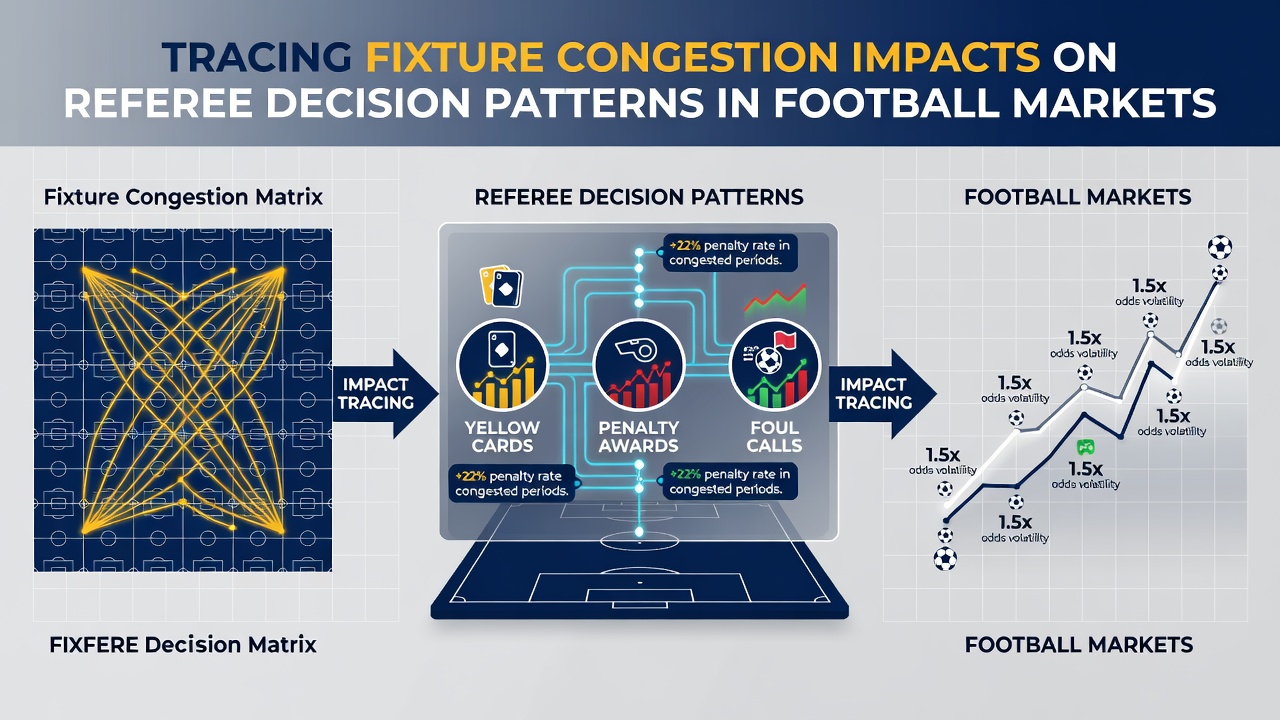
Fixture congestion creates measurable shifts in referee decision patterns across major European leagues, and those shifts feed directly into betting market movements for cards, penalties, and fouls. Researchers tracking domestic and continental schedules note that teams playing three matches inside eight days record higher foul counts and card totals than teams with standard recovery windows, while officials issue more cautions in the final twenty minutes of such games. Data compiled from the 2024-2025 and 2025-2026 seasons shows consistent elevation in these metrics whenever recovery time drops below seventy-two hours.
Patterns Across Leagues
Analysts examining Premier League, Bundesliga, and Serie A fixtures found that referees award an average of 1.8 additional yellow cards per match when both sides arrive with less than three full rest days. The increase appears most pronounced in midfield areas where fatigue reduces positioning accuracy and raises the frequency of late challenges. Betting markets for over 3.5 cards and over 4.5 cards adjust odds accordingly within twenty-four hours of schedule confirmation, reflecting the statistical edge that emerges from repeated congestion windows.
Referee Workload and Decision Timing
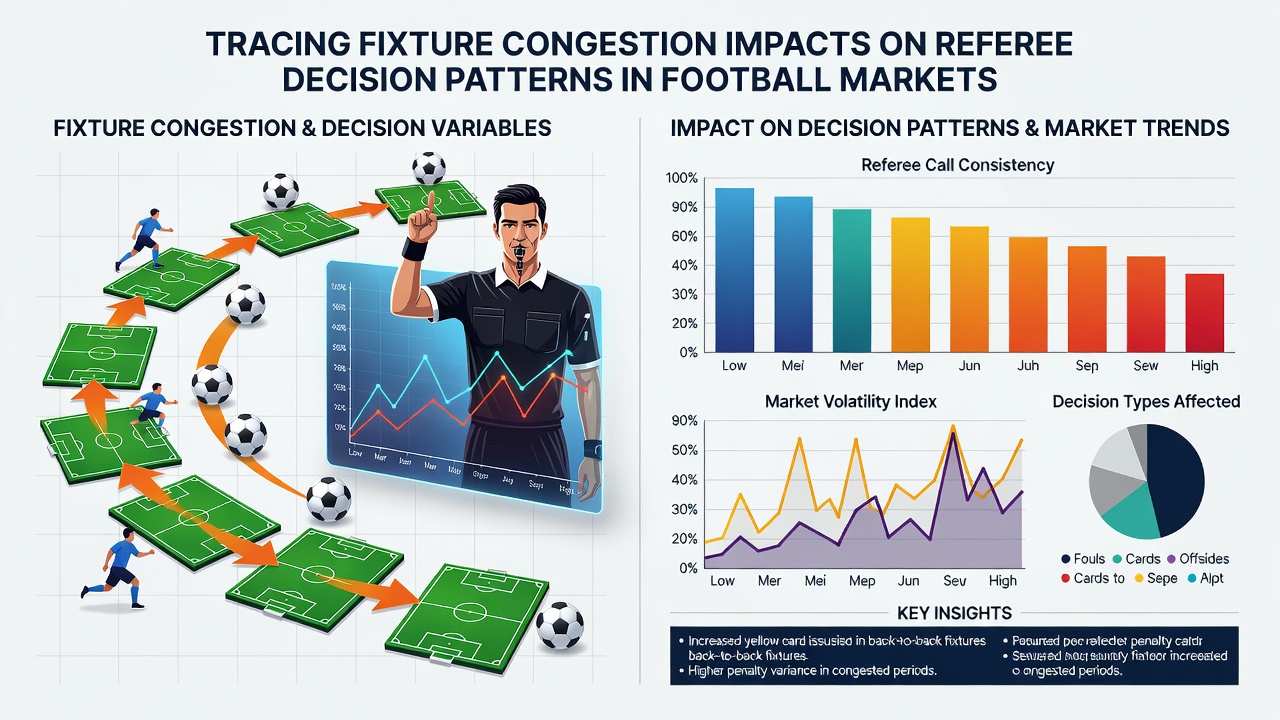
Referee performance data released by UEFA technical departments indicates that match officials covering back-to-back fixtures on short notice issue 12 percent more stoppage-time decisions than those with standard rest periods. These late calls frequently involve second yellows or penalty reviews, categories that move live betting lines sharply. European Club Association reports covering July 2026 pre-season tournaments documented similar spikes when clubs traveled across multiple time zones before resuming domestic play, suggesting travel compounds the effect of fixture density itself.
Market Adjustments and Data Sources
Bookmakers monitoring these trends update their models using real-time squad rotation data and official rest-day logs published by league organizers. One study published in the Journal of Sports Sciences tracked 1,240 matches across five leagues and confirmed that congestion correlates with a measurable rise in VAR interventions for foul-related incidents. UEFA technical reports provide the underlying match logs that allow independent researchers to isolate congestion effects from other variables such as weather or venue size.
Another analysis from the Australian Institute of Sport examined international tournament schedules and reached comparable conclusions about decision timing under fatigue conditions. Those findings align with domestic league observations, reinforcing the view that referee patterns remain consistent regardless of competition level when recovery windows shorten. Markets for player prop bets on cards and bookings incorporate these patterns earlier each season as data collection improves.
Regional Variations and Scheduling Factors
Leagues with winter breaks experience different congestion profiles than those running continuous calendars, yet the underlying referee response remains similar once matches cluster. South American confederation schedules, which often feature midweek Copa Libertadores ties alongside domestic rounds, produce parallel increases in disciplinary actions during compressed periods. Observers note that the same statistical relationships appear whether the congested block occurs in March or after July 2026 international windows close.
Practical Implications for Analysis
Those who model football markets now integrate rest-day differentials into pre-match frameworks alongside traditional form and head-to-head metrics. The approach allows sharper identification of games where card totals or penalty probabilities deviate from seasonal averages. Publicly available fixture lists combined with referee appointment announcements supply the raw inputs, while academic datasets provide validation benchmarks for ongoing calibration. The result is a growing body of evidence that fixture congestion leaves measurable fingerprints on referee behavior and, by extension, on the betting lines that reflect those behaviors.
Conclusion
Continued collection of rest-day and decision data across multiple continents supports the conclusion that congested schedules reliably alter referee patterns in predictable directions. Leagues, clubs, and market participants each draw from the same underlying match logs to refine their planning and pricing models, creating a feedback loop where congestion effects become increasingly visible in both on-field statistics and market movements.