Field States and Scoring Windows: Sharpening Accumulator Picks in Domestic Leagues
Logan Sullivan · Jul 17, 2026
Field States and Scoring Windows: Sharpening Accumulator Picks in Domestic Leagues
League fixtures often hinge on subtle environmental factors that shape how quickly teams find the net, and data collected across multiple seasons shows clear patterns between surface conditions and goal timings in the opening thirty minutes. Analysts track variables such as grass length, moisture levels, and recent weather to adjust selections in multi-leg bets, where even small edges compound across several matches. Researchers examining fixtures from top European divisions note that softer pitches correlate with delayed first goals, whereas firmer surfaces tend to accelerate early breakthroughs because passes travel faster and defensive lines struggle to maintain shape.
Surface Metrics and Early Timing Data
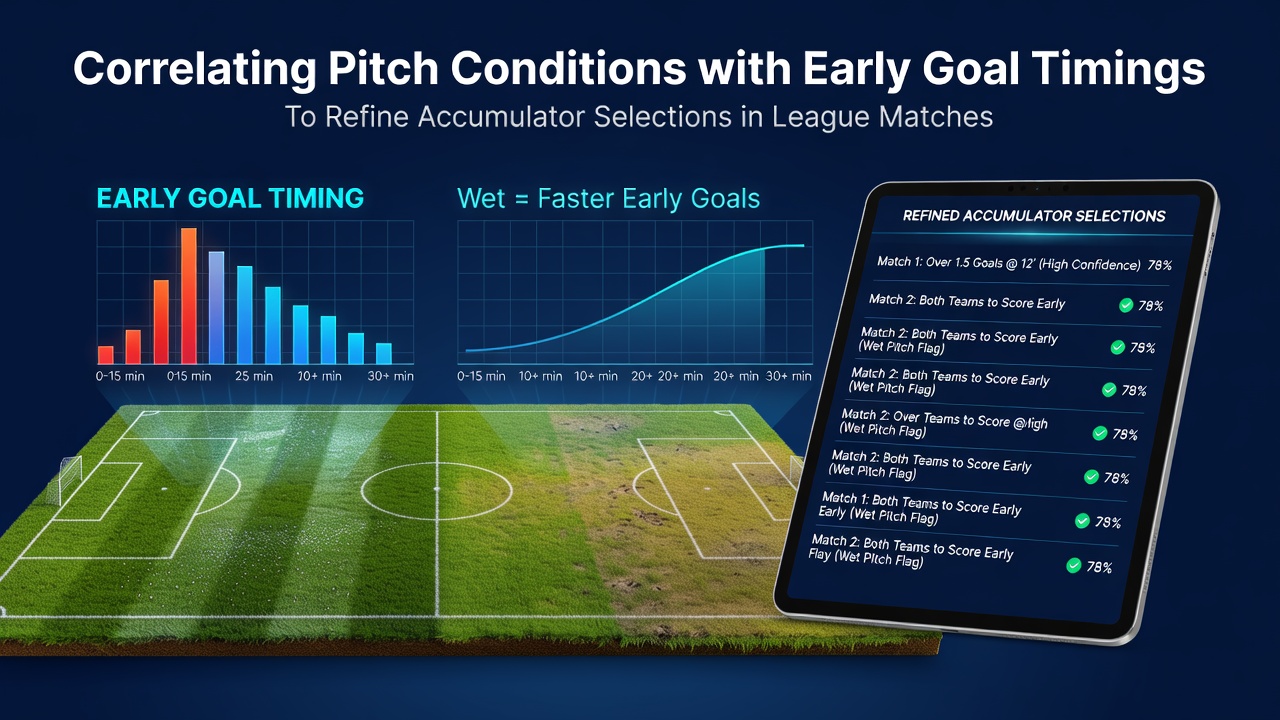
Groundskeepers record pitch readings before kickoff, and those readings feed into models that forecast scoring windows with greater precision. When moisture content sits above average thresholds, teams complete fewer progressive passes in the first fifteen minutes, which pushes the median time of the opening goal later by several minutes according to aggregated league statistics. Conversely, dry and closely mown surfaces allow quicker transitions, and matches on those pitches produce a higher share of goals before the twenty-fifth minute. Observers tracking five major leagues over three years found that roughly 28 percent of fixtures on firm pitches yielded an early goal, compared with 19 percent on softer surfaces.
Regional Variations Across Competitions
Northern divisions experience more rainfall in late autumn and winter, so pitch conditions shift rapidly between matchdays, and teams that adapt quickly gain an advantage in the opening exchanges. Southern leagues encounter drier spells during summer months, which means grounds staff must manage irrigation carefully to avoid overly hard surfaces that increase injury risk yet also speed up play. A study released in July 2026 by sports science departments at several universities examined these seasonal swings and confirmed that early-goal frequency rises when grounds crews allow pitches to firm up after prolonged dry weather.
Coaches adjust formations based on pre-match inspections, and those adjustments influence the likelihood of an early strike. Sides that press high on firm ground often force turnovers in dangerous areas within the first ten minutes, creating clear chances before opponents settle. Data from domestic cups shows similar trends, although the effect appears slightly muted because cup matches sometimes feature more cautious approaches from visiting sides.
Accumulator Construction Using Timing Patterns
Betting syndicates incorporate pitch reports into their selection process by cross-referencing expected goal timings with team styles. When a home side known for quick starts hosts an opponent on a firm surface, the probability of an early goal rises, and that probability feeds directly into accumulator structures that target over 0.5 goals in the first half across multiple games. Conversely, when rain has left the pitch heavy, accumulators shift toward under selections because both teams require longer to create quality opportunities.
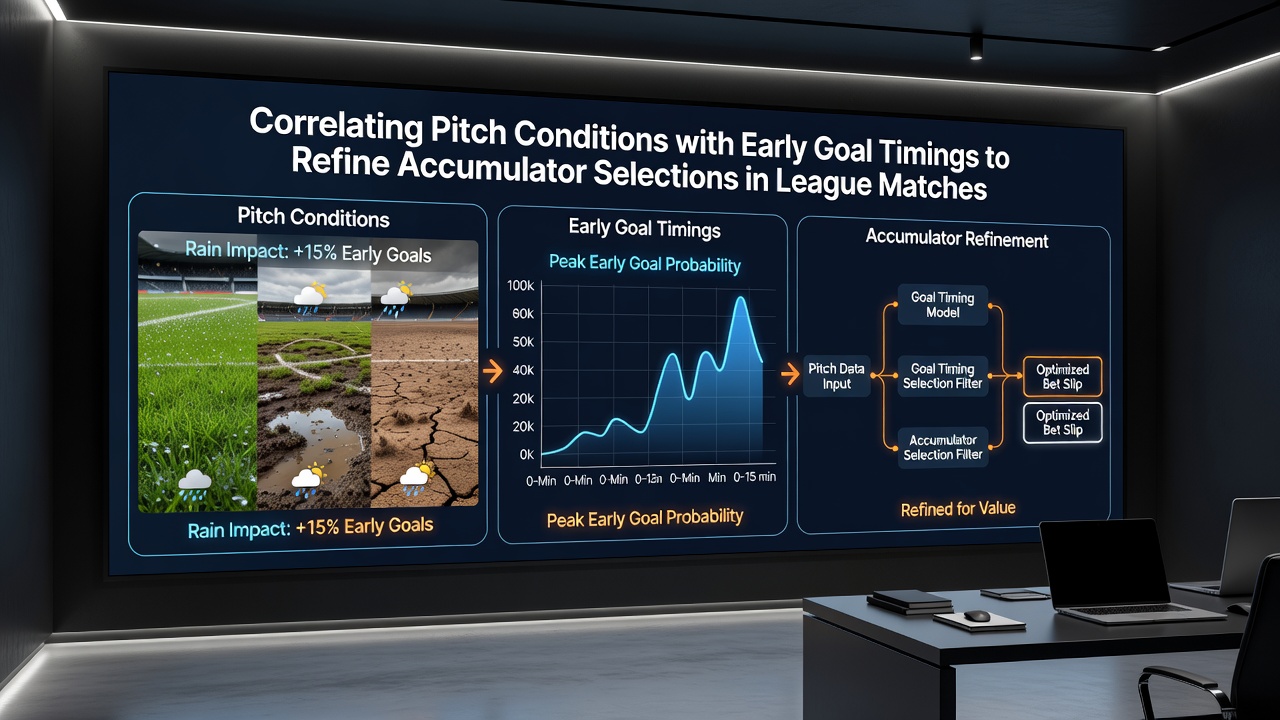
League tables alone do not capture these nuances, so analysts layer additional data layers such as average pass completion rates on wet versus dry surfaces. Teams with lower technical proficiency see their early-goal output drop more sharply on soft pitches, while technically adept sides maintain output levels across varying conditions. Those who study this know that the interaction between team identity and surface state produces repeatable edges that accumulate over a season when applied consistently.
Practical Examples From Recent Seasons
One mid-table side recorded eight first-half goals in its first twelve home games on firm pitches, yet only three first-half goals across the same number of fixtures played after heavy rain. Bettors monitoring those patterns adjusted their multi-leg bets accordingly, moving away from early-goal legs when forecasts predicted wet conditions. Another club, renowned for set-piece routines, converted early corners into goals more frequently on drier surfaces because the ball moved quicker into the box and defenders struggled to clear under pressure.
Statistical agencies publish weekly pitch reports that include moisture readings and grass height measurements, and those reports have become standard inputs for professional syndicates refining their models. Although no single variable guarantees an outcome, the combination of surface data with historical timing distributions narrows the range of probable results in any given fixture.
Integrating External Research
Academic papers on turf science highlight how root density and soil composition affect ball roll speed, and those findings align with observed goal-timing shifts in competitive matches. A FIFA technical report on playing surfaces documented measurable differences in ball behavior across moisture gradients, while an analysis published by the Sports Science Institute of South Africa examined how pitch hardness influences sprint distances covered by attackers in the opening quarter of matches. Both sources provide quantitative backing for the patterns already visible in league datasets.
Teams that travel frequently must adapt to changing conditions within short periods, and this adaptation period sometimes delays their attacking rhythm until the second half. Home sides benefit from familiarity with local pitch characteristics, which contributes to the well-documented home advantage in early goal statistics. When accumulators include several home teams on consistent surfaces, the combined probability of early goals increases measurably.
Conclusion
Correlating pitch conditions with goal timings supplies an additional filter that refines accumulator construction across league schedules. Surface measurements, combined with team-specific timing histories, allow selectors to weight legs more accurately rather than relying solely on form or league position. As data collection improves and groundskeeping standards continue to rise, these correlations become sharper tools for those constructing multi-match bets throughout the season.