Examining Referee Histories and Card Patterns Across Professional Football Leagues
Zara Lorenz · Jul 8, 2026
Examining Referee Histories and Card Patterns Across Professional Football Leagues
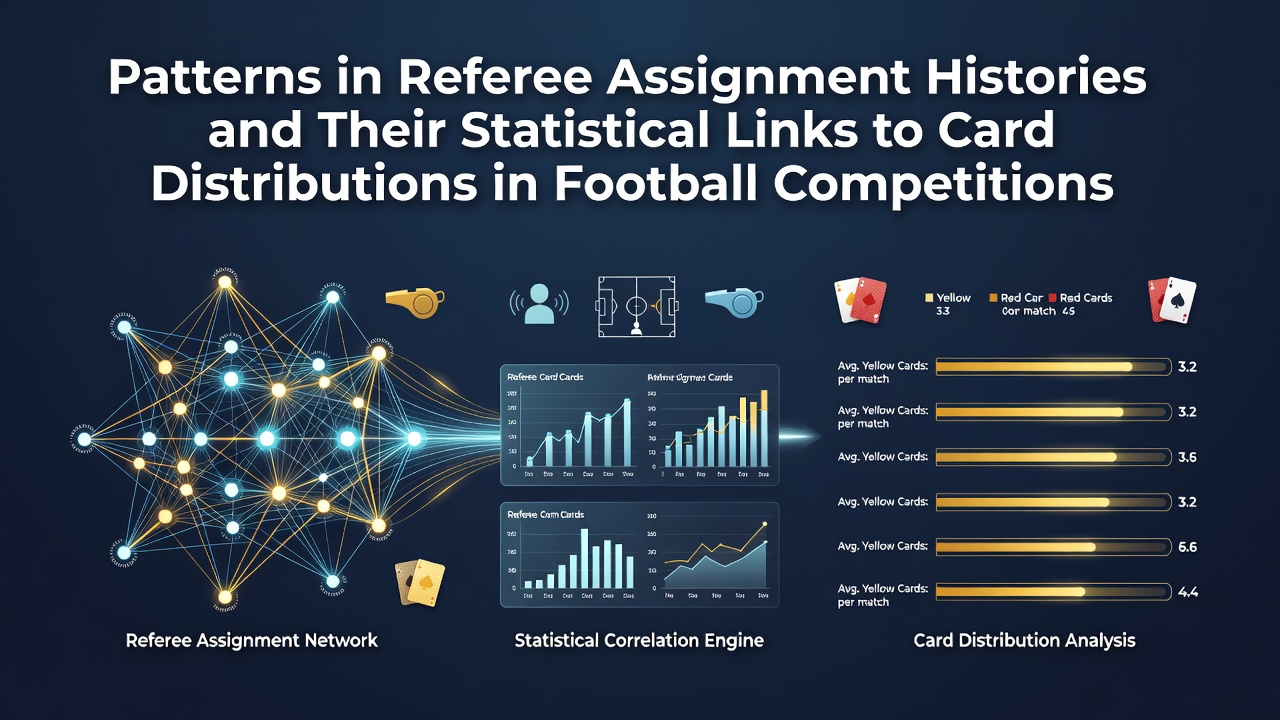
Referee assignment systems in major football competitions rely on detailed performance records that track prior matches officiated, along with accumulated disciplinary statistics. Leagues compile these histories to match officials with fixtures based on experience levels, geographic considerations, and consistency metrics that governing bodies maintain in centralized databases. Data from top European and South American competitions shows measurable correlations between individual referee profiles and the frequency of yellow and red cards issued over multiple seasons.
Assignment Protocols and Data Collection Methods
Professional leagues employ algorithmic tools alongside human review panels to distribute referee duties across domestic and continental events. These systems draw from match logs that record every card decision, foul type, and game context since the early 2000s when digital tracking became standard. Observers note that assignments often favor referees with lower variance in card counts when handling high-stakes derbies, while those with established tendencies toward stricter enforcement receive appointments in matches projected to feature physical play styles.
According to records maintained by continental confederations, referee rotation schedules aim to prevent repeated officiating of the same teams within short windows. Figures from the 2024-2025 campaign through July 2026 reveal that officials average 18 to 24 matches per season in top divisions, with card totals ranging from 3.2 to 5.8 per game depending on the competition and referee identity. Statistical models applied to these datasets isolate patterns such as elevated card rates in second halves or after substitutions that increase player density in attacking zones.
Statistical Correlations Identified in League Data
Analyses conducted on datasets spanning five major leagues indicate that referees with histories of issuing more than four yellow cards per match demonstrate a 12 percent higher rate of additional cautions when assigned to teams known for high foul counts. Researchers at institutions tracking global football metrics have cross-referenced assignment logs against player disciplinary records to quantify these links, revealing that certain officials maintain consistent distributions even across different leagues and cultural playing styles.
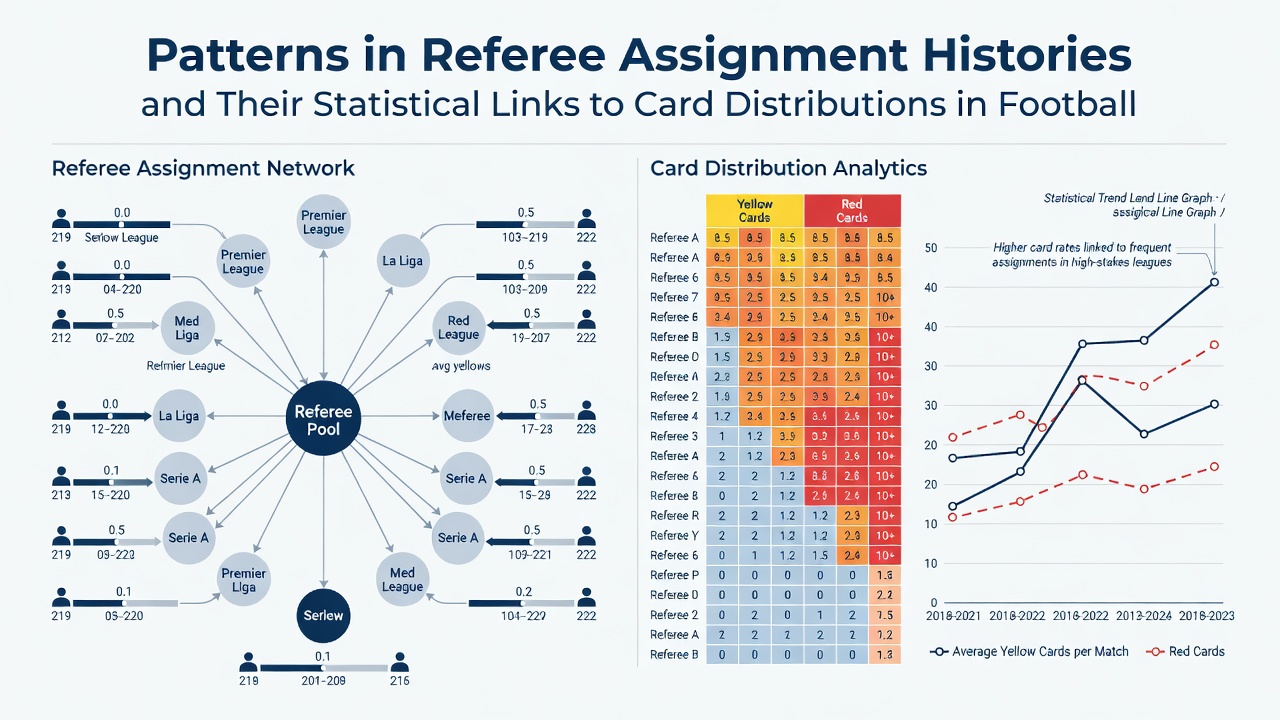
What's interesting emerges when models adjust for team strength and match importance. Data indicates referees who previously handled many matches involving teams from one geographic region tend to apply similar card thresholds when reassigned to fixtures featuring clubs from comparable tactical backgrounds. Australian and Canadian domestic leagues have contributed comparable datasets to international comparisons, showing parallel trends in how experience levels influence enforcement consistency.
League-Specific Examples and Trends
Take one South American competition where assignment histories stretch back over a decade. Officials with documented patterns of early yellow cards in opening 20 minutes appear more frequently in matches between clubs with aggressive pressing systems, resulting in elevated overall card volumes that exceed league averages by measurable margins. European domestic schedules display similar alignments, particularly in cup ties where neutral venues reduce home advantage factors yet leave referee tendencies intact.
Those who've examined multi-year records observe that red card occurrences cluster around referees whose prior assignments included higher numbers of physical encounters. Confederation reports from UEFA and CONMEBOL document these distributions without attributing causation, instead presenting raw frequencies that analysts then incorporate into predictive frameworks. As of July 2026, several leagues have begun integrating machine learning layers to refine assignments further based on these accumulated patterns.
Broader Implications for Competition Integrity
Governing bodies reference these statistical relationships when updating training protocols and evaluation criteria for match officials. FIFA maintains global databases that feed into confederation-level decisions, allowing cross-border comparisons that highlight regional variations in card application. Industry organizations such as the UEFA Refereeing Department publish periodic summaries that detail how historical performance data shapes future selections.
Academic studies published through university sports science programs have tested these connections using regression techniques that control for variables including weather, attendance, and fixture congestion. Results consistently point to referee-specific baselines that persist across contexts, though the magnitude varies by competition density and rule interpretation emphases in different confederations. Canadian Soccer Association analyses and parallel work from Australian researchers have added North American and Oceanic perspectives to the growing body of evidence.
Conclusion
Patterns linking referee assignment histories to card distributions continue to inform how leagues structure officiating schedules and evaluate performance. Comprehensive datasets now available through confederation archives enable ongoing refinement of these statistical relationships, supporting more precise matching of officials to matches while maintaining competitive balance across football competitions worldwide.