Elevation Impacts on Andean Soccer Leagues Reshaping In-Play Betting Patterns and Accumulator Builds
David Fischer · Jul 29, 2026
Elevation Impacts on Andean Soccer Leagues Reshaping In-Play Betting Patterns and Accumulator Builds
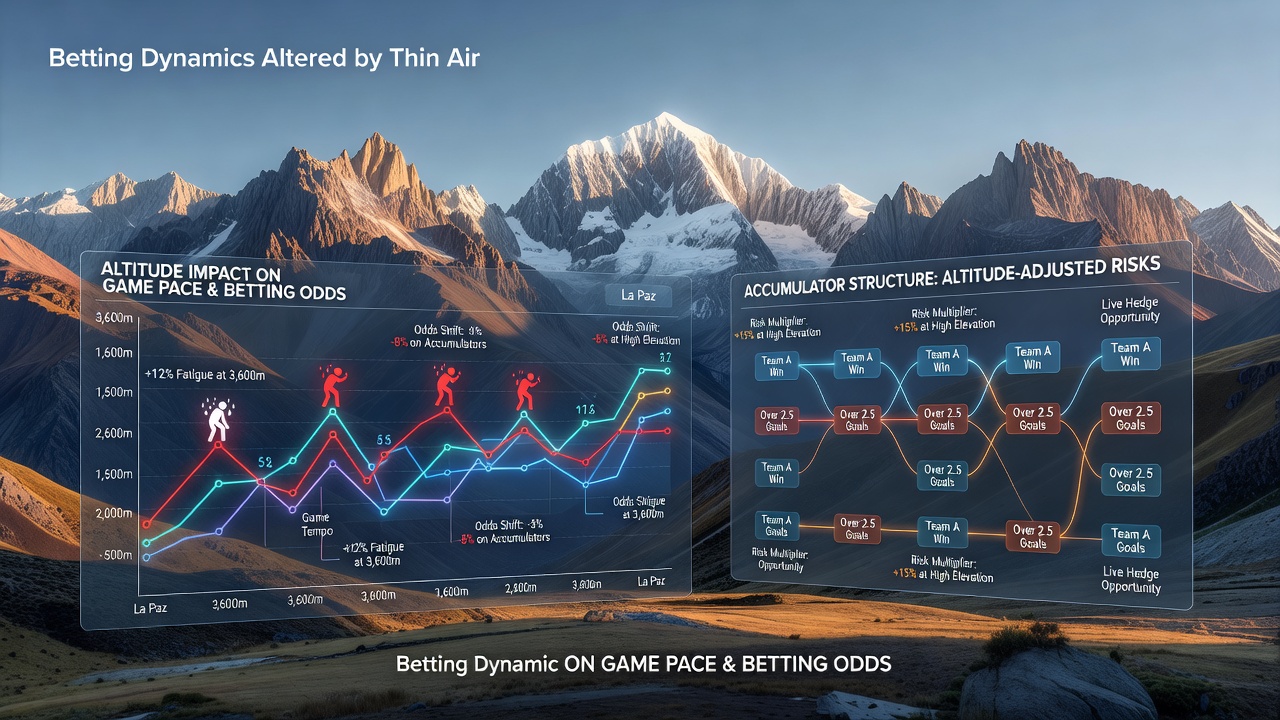
Football leagues across the Andean region operate at elevations ranging from sea level to over 3,600 meters, creating distinct performance variables that directly influence live betting markets and the structure of accumulator bets. Teams based in cities like La Paz, Quito, and Cusco regularly host matches where visiting sides encounter rapid fatigue due to reduced oxygen availability, and this pattern produces measurable shifts in match statistics such as possession retention and goal timing.
Performance Metrics at Varying Elevations
Data from CONMEBOL competitions indicates that home teams in high-altitude venues record higher completion rates for passes in the final third during the second half, while visiting players show elevated heart rates and reduced sprint distances after the 60-minute mark. Researchers tracking physiological responses have documented that acclimatization periods of at least 10 days allow visiting squads to mitigate some effects, yet most league schedules provide shorter windows, leaving performance gaps that live odds adjust for in real time.
Matches in Bolivia's top division demonstrate these trends consistently, with goal tallies often rising after the 70th minute when visiting defenses lose shape. Peruvian and Ecuadorian fixtures at intermediate altitudes around 2,800 meters produce milder but still detectable changes, particularly in humidity combined with thinner air that affects recovery between plays.
Live Betting Adjustments During Matches
Betting operators monitor in-game data feeds that capture these altitude-driven shifts, and they update odds on next-goal markets or total corners within minutes of observed drops in visitor intensity. Accumulator builders who include multiple Andean fixtures must account for the probability that a low-altitude side will concede late goals when playing away at elevation, which alters the payout structure of multi-leg selections compared to standard European leagues.
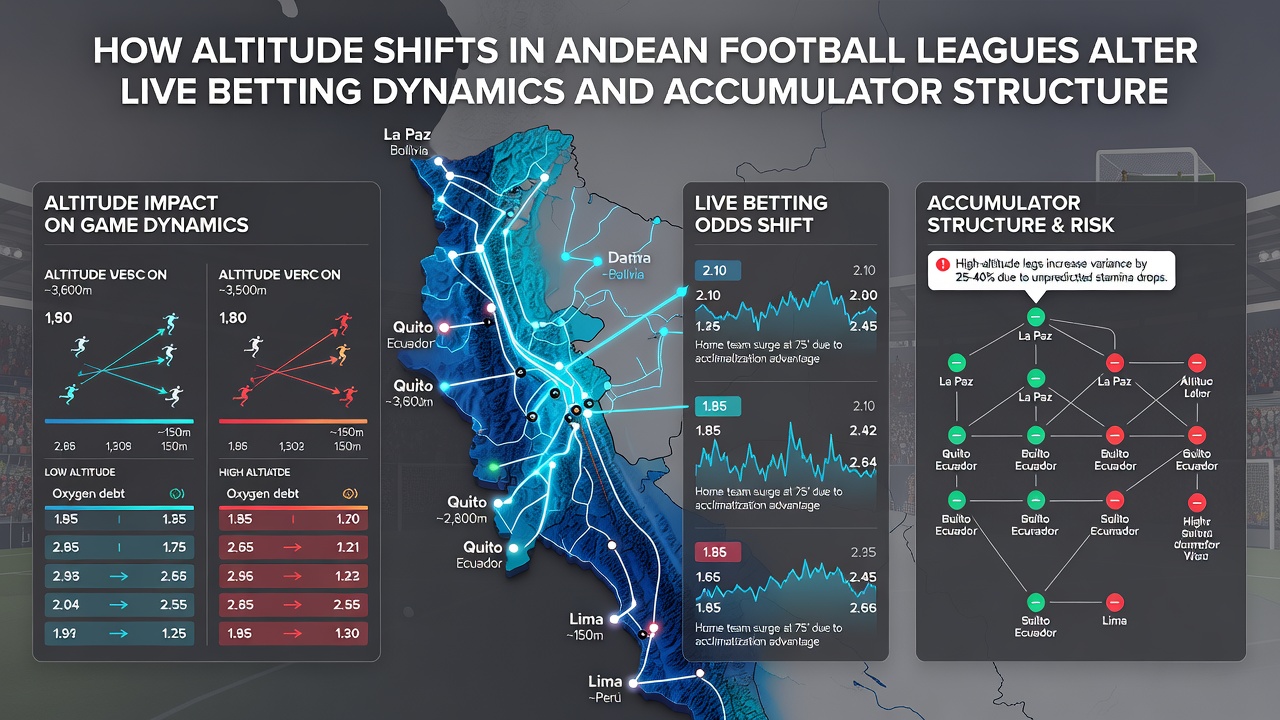
One analysis of 2025 season data revealed that live underdog bets on high-altitude home teams achieved higher strike rates in the closing stages, prompting platforms to widen margins on over/under goals once the clock passes 65 minutes. Bettors following these patterns often adjust accumulator legs mid-match by swapping in live lines that reflect the emerging physical disparity, rather than relying on pre-match selections.
Accumulator Construction Challenges
Multi-bet structures become more complex when they span several Andean venues because the altitude variable introduces variance not present in flatter terrains. A five-leg accumulator might combine a Bolivia home favorite with a Peruvian coastal match, yet the elevated leg frequently delivers unexpected outcomes that invalidate the entire ticket if the model fails to weight oxygen-related fatigue. Industry reports from South American gaming associations show that operators now provide altitude-specific filters in their accumulator builders to help users incorporate elevation data alongside traditional form and head-to-head statistics.
During July 2026, several leagues plan mid-season breaks that coincide with international fixtures, allowing some visiting clubs additional recovery time before high-altitude games, and early modeling suggests this scheduling tweak could narrow performance gaps in live markets. Those tracking the changes note that accumulator payouts on combined Bolivian and Ecuadorian legs may stabilize slightly compared to previous cycles where no such pauses occurred.
Regional Data Integration
Studies published through regional sports science networks highlight how ball flight behaves differently at altitude, with longer distances traveled on long passes and set pieces, which in turn affects corner and card markets in live betting interfaces. Platforms integrate these variables into algorithms that recalibrate odds faster than in sea-level leagues, creating windows where informed bettors can respond to emerging patterns before lines settle.
League tables from the current campaign show that teams with dedicated high-altitude training camps maintain better second-half statistics, and this consistency influences the way accumulators are priced when those clubs appear as away selections. Observers tracking these developments point to CONMEBOL's ongoing data collection efforts as a source for refining predictive models that incorporate elevation alongside standard metrics.
Conclusion
Altitude variations across Andean football leagues produce consistent, quantifiable effects on player output that reshape both live betting dynamics and the risk profiles of accumulator structures. As schedules evolve through 2026, continued monitoring of physiological and statistical trends will determine how operators and participants adjust their approaches to these unique environmental factors.