Altitude Patterns Reshaping Multi-Sport Accumulator Structures
Jordan Bennett · Jul 12, 2026
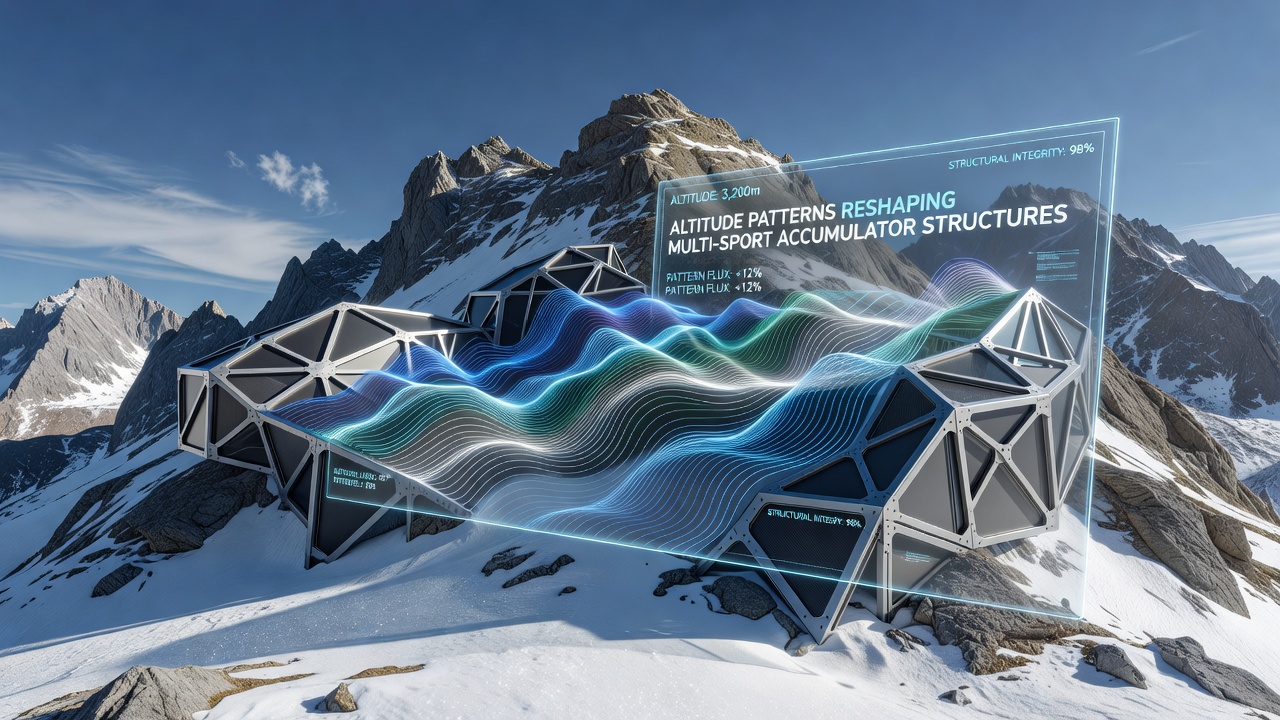
Altitude Patterns Reshaping Multi-Sport Accumulator Structures
Altitude patterns have started to influence how bettors construct multi-sport accumulator structures across football, tennis, rugby and several other disciplines, since venues at different elevations create measurable shifts in player output and match statistics. Research from sports science institutions shows that oxygen availability drops roughly 10 percent at 1,500 metres and continues to decline at higher levels, which alters sprint distances, recovery times and error rates in predictable ways. Bettors who combine events from sea-level venues with those at 2,000 metres or above must adjust stake distribution and leg selection accordingly, because historical data sets reveal different variance profiles for each elevation band.
Performance Metrics Across Elevation Bands
Studies conducted by the University of Colorado's Altitude Research Center indicate that football teams playing above 2,500 metres record 12 to 18 percent fewer high-intensity runs in the final 15 minutes of matches compared with their sea-level baselines. Tennis players competing at similar heights display serve speeds that fall by an average of 4 kilometres per hour after the second set, while rally lengths increase because opponents struggle to maintain court coverage. These patterns appear consistently in datasets covering South American World Cup qualifiers, Major League Soccer fixtures in Denver and ATP tournaments in Bogota.
Rugby union provides another clear example because scrums and lineouts at altitude place extra demands on aerobic capacity. Australian Institute of Sport analyses of Super Rugby matches in Johannesburg show that forward packs from lower elevations commit 15 percent more handling errors after the 60-minute mark. When these matches appear in accumulators alongside lower-altitude events, the probability distributions shift enough to warrant separate correlation calculations rather than standard multi-leg multipliers.
Accumulator Construction Adjustments
Modern accumulator builders now segment legs by elevation rather than by sport alone. A typical four-leg structure might pair two sea-level football matches with one high-altitude rugby contest and one mid-elevation tennis fixture, then apply weighting factors derived from historical performance drops. Data compiled by the International Olympic Committee working group on environmental physiology demonstrates that combining three or more legs from venues above 1,800 metres increases overall variance by approximately 22 percent compared with mixed-elevation selections of the same size.

Software platforms used by professional syndicates have added altitude filters that automatically flag legs where expected goal or point totals deviate from league averages. These tools draw on meteorological archives and venue-specific performance logs to generate adjusted totals that reflect reduced ball flight distances in thinner air and slower recovery between high-effort actions. One documented case from the 2025 Copa Libertadores campaign showed that teams travelling from coastal cities to La Paz produced 0.8 fewer expected goals per game than their season averages, a figure now incorporated into accumulator pricing models.
July 2026 Scheduling Implications
July 2026 features several high-profile events at notable elevations, including the Copa America group stage in Quito and an ATP 500 tournament in Bogota. Organisers have released preliminary schedules that place multiple matches within a 72-hour window at venues above 2,800 metres. Observers note that accumulator volume on these fixtures has already begun to rise because syndicates seek to exploit the documented performance gaps between acclimatised and non-acclimatised squads. Regulatory filings from the Nevada Gaming Control Board and the South African Gambling Board both record increased handle on altitude-related specials during similar clustered scheduling periods in previous years.
Data Integration and Risk Modelling
Statistical services now supply elevation-corrected player ratings that feed directly into accumulator construction engines. These ratings adjust for reduced partial pressure of oxygen, temperature differentials and travel fatigue, producing outputs that differ materially from standard models. A 2024 peer-reviewed paper in the Journal of Sports Sciences quantified how these corrections improve forecast accuracy by 7 to 11 percentage points when applied to multi-venue parlays spanning three or more elevation zones.
Industry associations such as the European Gaming and Betting Association have highlighted the need for transparent disclosure of altitude-adjusted odds so that recreational participants understand the modified risk profiles. Several operators have responded by publishing simplified elevation impact summaries alongside their standard accumulator builders.
Conclusion
Altitude patterns continue to reshape multi-sport accumulator structures through measurable effects on physical output and match statistics. Bettors who incorporate venue-specific elevation data into leg selection and stake allocation gain access to refined probability estimates that standard models overlook. As more events cluster at higher elevations in 2026 and beyond, the integration of these factors into accumulator frameworks is expected to become standard practice across the sector.