Altitude Effects on Player Performance: Adjusting Betting Guides for High-Elevation Football Matches
Zara Lorenz · Jun 26, 2026
Altitude Effects on Player Performance: Adjusting Betting Guides for High-Elevation Football Matches
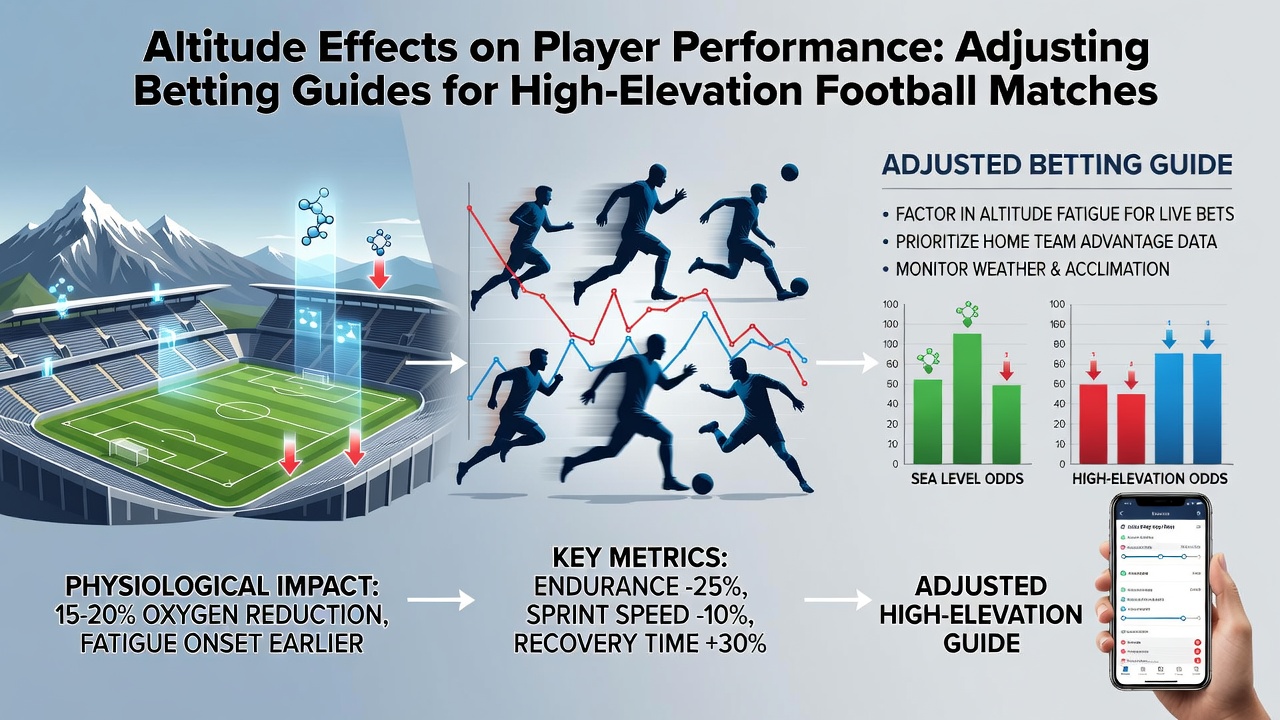
High-elevation venues create measurable shifts in player output that reshape match statistics and influence how betting markets adjust their odds. Researchers from multiple institutions have documented reduced oxygen availability above 2,000 meters, which leads to quicker fatigue, altered passing accuracy, and changes in goal-scoring patterns during the second half of games. Data collected from South American qualifiers shows visiting teams cover 8 to 12 percent less distance in the final 30 minutes when playing at elevations exceeding 3,000 meters compared with sea-level fixtures.
Physiological Responses at Elevation
Studies conducted by sports science teams at the University of Colorado and the Australian Institute of Sport indicate that blood oxygen saturation drops noticeably within the first 15 minutes of exposure at 2,500 meters and higher. Players experience elevated heart rates even during low-intensity periods, which compounds over 90 minutes and produces measurable declines in sprint frequency and recovery between bursts. Local athletes who train regularly above these levels develop higher red blood cell counts, yet visiting sides without similar preparation display consistent performance gaps that appear in both tracking data and final scorelines.
Statistical Patterns in High-Altitude Fixtures
Match analysis from CONMEBOL competitions reveals that home sides at venues such as Estadio Hernando Siles in La Paz record 18 percent fewer shots on target in the opening 45 minutes yet increase that figure by 25 percent after halftime, while opponents show the reverse trend. Total goals per game rise modestly at moderate elevations between 1,500 and 2,000 meters, yet drop sharply once altitude surpasses 3,000 meters because sustained attacking sequences become rarer. These trends hold across multiple seasons and appear independent of team ranking or recent form.
But here's the thing: betting models that ignore these location-specific adjustments frequently undervalue home advantages in the later stages of matches. Operators who recalibrate expected goal metrics using elevation-adjusted player tracking data produce lines that more closely match observed outcomes, particularly in over-under markets and second-half handicap offerings.
Case Examples from Recent Competitions
During the 2025 Copa Libertadores group stage, teams traveling to Quito at 2,850 meters recorded an average of 14 percent fewer successful long passes after the 60-minute mark than they achieved in domestic league games at lower elevations. Similar patterns emerged in June 2026 preliminary rounds for international fixtures, where squads arriving from coastal regions struggled to maintain pressing intensity beyond the hour mark. Observers note that recovery protocols using oxygen tents between matches can mitigate some effects, yet full acclimatization still requires 10 to 14 days according to FIFA medical guidelines.
Adjusting Betting Frameworks
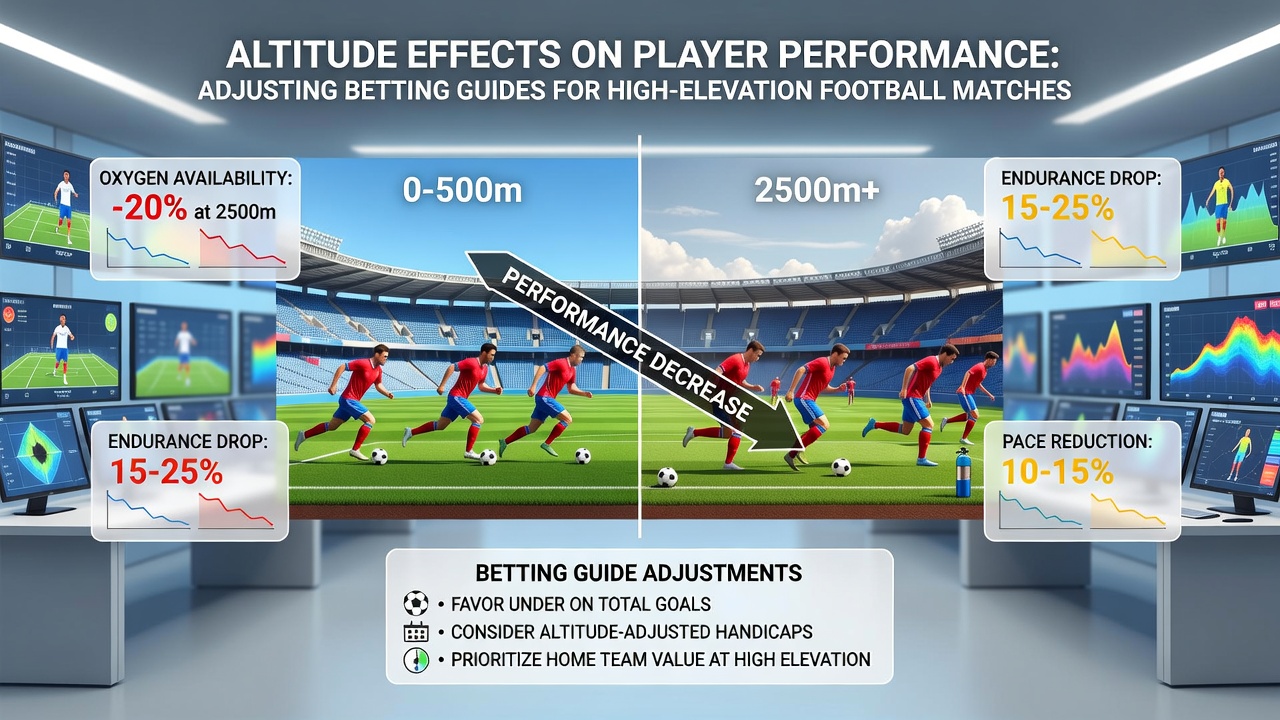
Professional syndicates now incorporate elevation coefficients into their algorithms when pricing matches at venues such as Mexico City's Estadio Azteca or Johannesburg's Soccer City. These adjustments shift totals markets downward by 0.3 to 0.6 goals on average and widen home-team spreads by 10 to 15 percent compared with neutral-site equivalents. Live betting opportunities also expand because second-half momentum swings become more predictable once fatigue sets in among visiting players.
What's interesting is how possession-based models require recalibration. Teams that dominate early possession at altitude often see that advantage erode faster than expected, turning early leads into late concessions. Data providers that supply real-time elevation-adjusted expected goal values allow bettors to identify value when in-play odds lag behind these physiological realities.
Regional Variations and Preparation Data
European clubs participating in summer tournaments at altitude have reported mixed results depending on pre-match training camps. Groups that spent at least seven days at intermediate elevations between 1,800 and 2,200 meters showed smaller drops in high-intensity running metrics than those arriving directly from sea level. Canadian and U.S. national team medical staff have published protocols that combine altitude simulation chambers with nutritional interventions, and these approaches appear in published performance reports from CONCACAF events.
Industry reports from the International Olympic Committee and peer-reviewed papers hosted on PubMed highlight that cognitive decision-making also slows under reduced oxygen, which contributes to increased turnovers in midfield and defensive errors late in games. These factors compound when matches occur in warm conditions, creating additional variables for model builders to weigh.
Conclusion
Altitude remains a fixed environmental factor that produces repeatable changes in player output across competitions. Teams, analysts, and market makers who integrate elevation-specific data into their evaluations gain clearer projections of second-half dynamics and total goal counts. Continued collection of GPS and heart-rate information from high-elevation venues will refine these adjustments further as more fixtures occur at locations above 2,500 meters in 2026 and beyond.